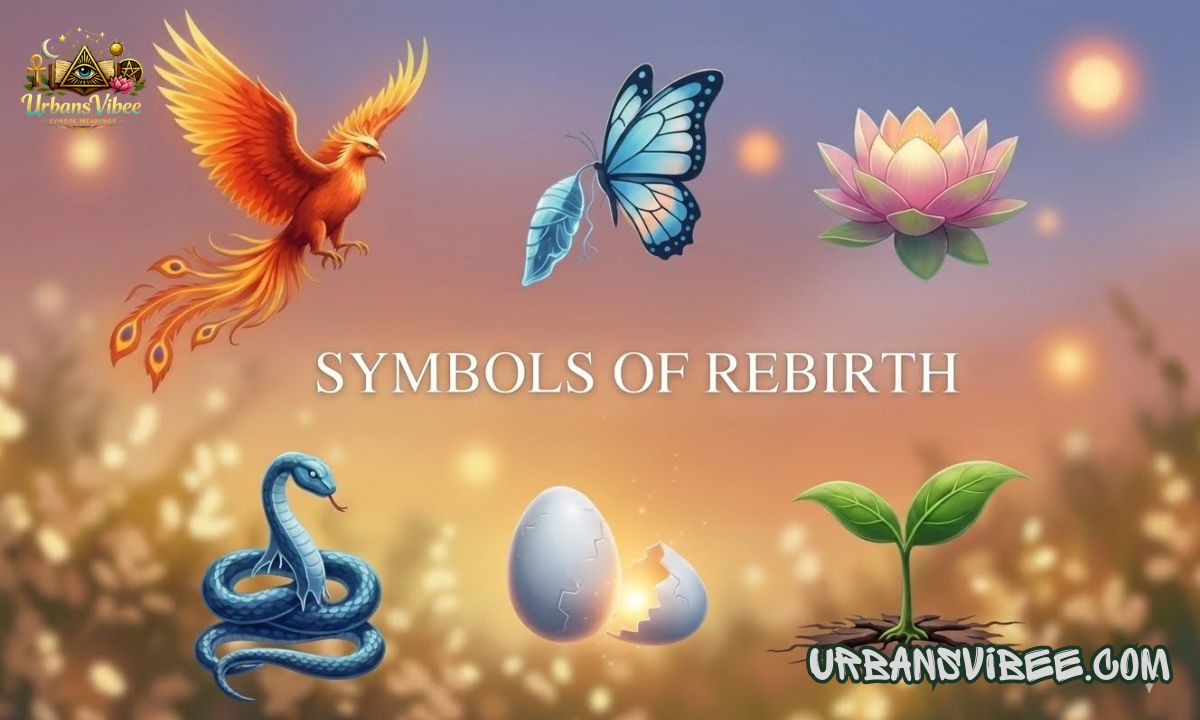
Symbols of rebirth are everywhere — carved into ancient temple walls, printed on coffee mugs, inked permanently on human bodies. They appear in every religion, every mythology, every culture that has ever existed on this planet.
And they all point toward the same powerful human truth: endings are not the end. Something new always rises.
This guide breaks down the most powerful symbols of rebirth, their origins, what they represent across cultures, and why humans have never stopped reaching for them.
What Are Symbols of Rebirth?
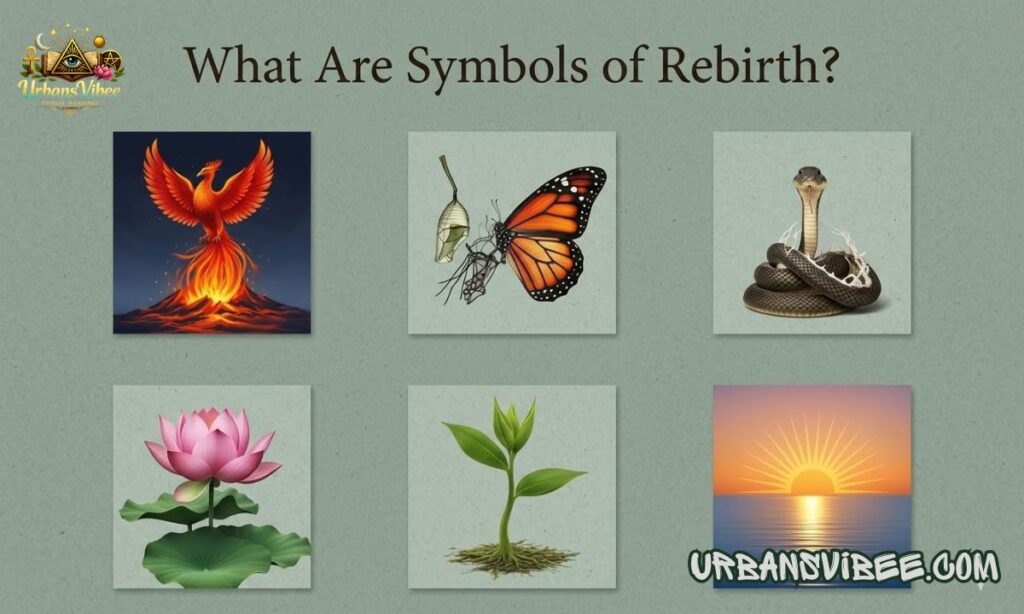
Symbols of rebirth are images, shapes, animals, and natural phenomena that represent the cycle of death and renewal — the idea that life does not end but transforms into something new. They appear in ancient mythology, spiritual traditions, art, literature, and daily life.
Whether it is a phoenix rising from ash, a lotus blooming from mud, or a butterfly emerging from its cocoon, these symbols compress one of humanity’s oldest beliefs into a single powerful image: transformation is always possible.
Powerful Symbols Of Rebirth And New Beginnings
| Symbol | Origin | Core Meaning |
| Phoenix | Greek / Egyptian | Resurrection, renewal after total destruction |
| Lotus Flower | Egypt / Buddhism / Hinduism | Rising above adversity, spiritual awakening |
| Butterfly | Universal | Metamorphosis, transformation, the soul’s journey |
| Ouroboros | Ancient Egypt / Greece | Eternal cycle of death and rebirth |
| Serpent / Snake | Universal | Shedding the old, regeneration, healing |
| Sunrise | Universal | New beginning, the daily miracle of renewal |
| Triskele | Celtic | Birth, death, and rebirth — the triple cycle |
| Egg | Universal | Creative potential, new life emerging |
| Scarab Beetle | Ancient Egypt | Daily rebirth of the sun, transformation |
| Tree of Life | Universal | Continuity, growth, connection across lifetimes |
Symbols Of Rebirth Tattoos
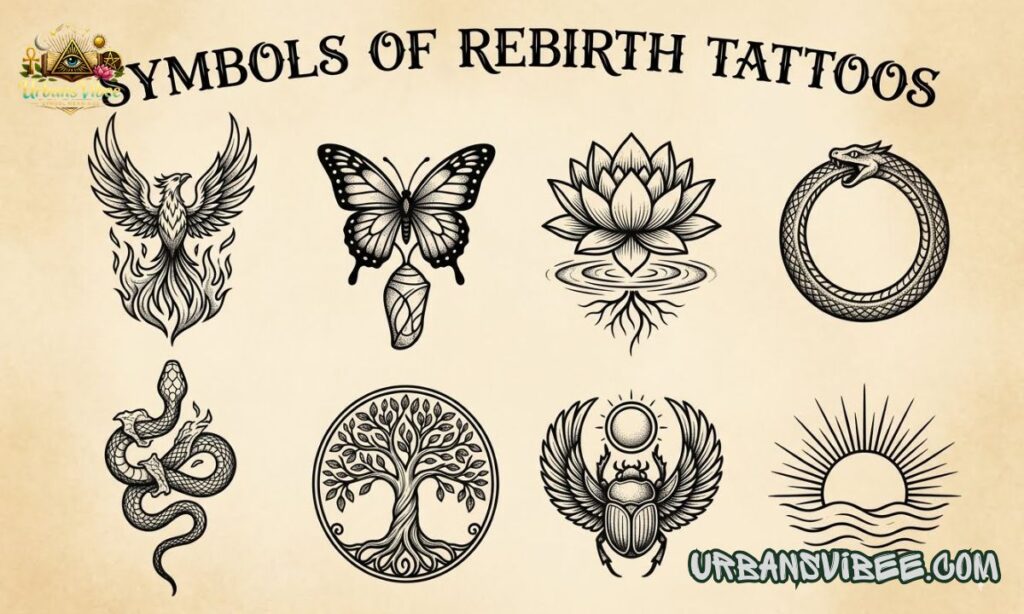
Rebirth tattoo symbols are among the most requested designs in tattoo studios worldwide. People choose them to mark personal transformation — surviving illness, leaving a toxic relationship, overcoming addiction, beginning again after loss. The most popular include:
- Phoenix tattoos — rising flames, golden-red feathers, upward movement
- Lotus tattoos — often combined with water or mandala patterns
- Butterfly tattoos — from tiny minimalist designs to large detailed pieces
- Ouroboros tattoos — circular, often with personal text inside
- Snake tattoos — coiled around an arm or wrist, symbolizing shed identity
- Triskele tattoos — for those with Celtic heritage or spiritual connection to the triple cycle
A rebirth tattoo is not just decoration. It is a permanent reminder of what you survived and who you became because of it.
Ancient And Cultural Symbols Of Rebirth
Humans have been encoding rebirth into symbols for thousands of years. These ancient symbols of rebirth emerged independently across cultures that never had contact with each other — proof that the need to believe in renewal is not cultural. It is human.
- Ancient Egypt: Scarab beetle, Ankh, lotus, phoenix (Bennu bird)
- Celtic traditions: Triskele, serpent, Brigid’s Cross, spiral
- Greek mythology: Phoenix, Ouroboros, the myth of Persephone
- Norse mythology: Yggdrasil (World Tree), Jormungandr (serpent)
- Hinduism: Lotus, the god Vishnu sleeping before each new cosmic cycle
- Buddhism: Lotus, the dharma wheel, the concept of rebirth (samsara)
- Indigenous cultures: Eagle feathers, the medicine wheel, seasonal ceremonies
Mythological And Religious Symbols Of Rebirth
Spiritual Symbols Of Rebirth
Across spiritual traditions, rebirth symbols carry a consistent message: the soul is not destroyed by suffering or death — it is refined and renewed by it. The fire that burns the phoenix does not kill it. The mud that holds the lotus does not stain it. In nearly every spiritual tradition, transformation requires passing through darkness first.
Symbols Of Rebirth In The Bible
In Christianity, rebirth is central. Water baptism symbolizes dying to the old self and rising to new life — a direct echo of the phoenix and lotus symbolism from far older traditions. Easter and the Resurrection of Christ are Christianity’s most powerful rebirth symbols, with roots in even older pagan spring equinox festivals. The dove, the white lily, and the egg all entered Christian symbolism as signs of new life.
Pagan Symbols Of Rebirth
Pagan traditions — particularly Celtic and Germanic — developed rich systems of rebirth symbolism centered on nature’s cycles. Ostara (the spring equinox) celebrated the return of life after winter, symbolized by eggs, rabbits, and flowers. Beltane honored the fertility of the earth reborn. The founders of the Church integrated these spring symbols into Christianity as part of converting pagan populations — which is why Easter eggs and spring flowers are found in both traditions.
Celtic Symbols Of Rebirth
The Celts built rebirth symbolism into nearly everything they created. Key Celtic rebirth symbols include:
- The Triskele (Triple Spiral) — three interlocking spirals representing birth, death, and rebirth. Found carved at Newgrange, a 5,200-year-old Irish passage tomb aligned to the winter solstice sunrise — the ultimate symbol of light returning after darkness
- The Serpent — before Christianity recast the snake as evil, the Celts saw it as a symbol of transformation and healing. The serpent was considered an immortal creature that came to life each year with a new skin, slithering up from the earth carrying ancient wisdom
- The Celtic Cross — with its solar wheel at the center, it honors the transition from winter to spring, making it a powerful emblem of renewal and rebirth
- St. Brigid’s Cross — woven from rushes at the start of spring, it invites renewal, protection, and new life into the home
Egyptian Symbols Of Rebirth
Ancient Egypt produced the world’s richest collection of rebirth symbolism. For Egyptians, rebirth was not a hope — it was a cosmic fact built into the structure of reality itself.
- The Scarab Beetle (Khepri) — the scarab beetle was associated with the sun god Khepri, who was believed to roll the sun across the sky each day. This symbol represented the daily rebirth of the sun — every sunrise a resurrection, every sunset a death
- The Ankh — the key of life, representing the eternal soul that survives physical death
- The Lotus — closes at night and opens each morning with the sun, making it a living symbol of regeneration. In Egyptian creation myth, the primordial lotus rose from the waters of chaos at the beginning of time and the sun god Ra emerged from its petals
- The Bennu Bird — Egypt’s original phoenix, the sacred heron associated with Ra and the first sunrise, which rises at the beginning of each new cosmic cycle
Famous Rebirth Symbols In Nature And Myth
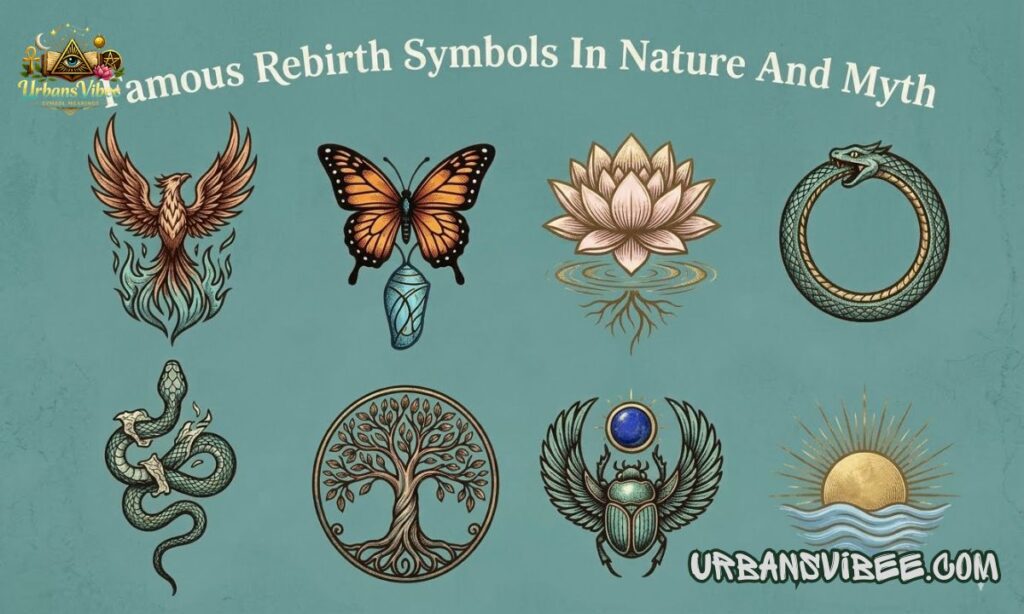
Phoenix
The phoenix is arguably the most universally recognized symbol of rebirth and renewal in human civilization. This mythological bird lives for 500 to 1,000 years, builds a nest of aromatic wood that ignites from the heat of the sun, burns completely to ash, and then rises again, young and magnificent.
The phoenix originated in ancient Egyptian mythology as the Bennu bird — a sacred heron connected to Ra, the sun god, and the cycles of the sun. It traveled from Egypt into Greek mythology and then into Roman, Persian, Chinese (the Fenghuang), and Japanese (the Hō-ō) traditions. Every culture gave it slightly different colors and characteristics, but the core meaning never changed: destruction is not the end. It is the beginning of something greater.
In modern culture, the phoenix represents surviving what should have destroyed you. It is the symbol chosen by people who have come through addiction, trauma, illness, and heartbreak — and risen from those experiences into something stronger.
Tree of Life
The Tree of Life is the most universal life symbol on earth, and at its heart it is a rebirth symbol. Its seasonal cycle — bare in winter, blooming in spring, bearing fruit in summer, shedding in autumn — mirrors the cycle of death and renewal that every living being experiences. In Norse mythology, Yggdrasil is the great ash tree that connects all nine worlds.
It endures. When all else burns in Ragnarök, the World Tree shelters two survivors who will repopulate the earth. The tree is not just a symbol of life — it is a symbol of life’s determination to continue through every ending.
Deep Symbolic Meaning of Rebirth
Spiritual Meaning
Spiritually, rebirth symbols point to a truth that transcends the physical: the soul is indestructible. Every major spiritual tradition — Christianity, Buddhism, Hinduism, Islam, indigenous spiritualities, paganism — contains some version of this belief. The symbols that represent it are not merely decorative. They are spiritual technology — tools for holding this truth in the body, not just the mind.
Meditating on a lotus or wearing a phoenix pendant is a way of aligning oneself with the principle of renewal. The symbol acts as a tuning fork, calling the mind and spirit back to the truth that endings are not final.
Psychological Meaning
Carl Jung argued that rebirth is not just a religious concept — it is one of the fundamental archetypes of the human psyche. He identified it as essential for self-awareness and psychological health. Transformation requires a kind of death: the death of the old identity, the old story, the old way of being. Rebirth symbols appear in dreams during major life transitions because the unconscious mind reaches for them naturally when a person is undergoing deep change.
The phoenix, butterfly, and serpent all appear regularly in dream symbolism precisely because they encode the psychological truth that the self can be remade.
Cultural Meaning
Culturally, rebirth symbols anchor communities through grief and transition. They appear at funerals to offer comfort, at weddings to bless new beginnings, at the birth of children to celebrate new life entering the world. They are the visual language of humanity’s most important threshold moments — the times when life demands that we let go of what was and step into what is becoming.
Types and Variations of Symbols of Rebirth
Phoenix
The phoenix does not merely survive — it thrives specifically because of destruction, not in spite of it. This is the symbol’s deepest teaching. Fire is not the enemy. It is the mechanism. Many people choose the phoenix as a personal symbol after experiences of devastating loss, because it reframes what happened: the burning was not punishment. It was preparation.
Lotus Flower
The lotus grows in muddy water. It passes through murky depths, then through water, then emerges into clean air to bloom. In Buddhism, this three-stage journey represents the path from ignorance through purification to enlightenment.
In Hinduism, the lotus is the seat of Lakshmi (goddess of abundance) and Brahma (creator of the universe) — born from the navel of Vishnu as he dreams the next cosmic cycle into existence. The lotus does not escape difficulty. It transforms it.
Butterfly
No symbol of rebirth is more immediately recognizable than the butterfly. What makes it so powerful is that it is not metaphor — it is literal biology. A caterpillar dissolves almost entirely inside its chrysalis.
Its body breaks down into a kind of cellular soup before reorganizing into something completely different. This radical biological transformation made the butterfly a natural symbol of the soul’s journey in ancient Greek culture — the word psyche means both “soul” and “butterfly” in Greek.
Sunrise
The sunrise is the original daily rebirth. Ancient Egyptians built entire temples aligned to catch the first ray of dawn — because the sunrise was not just a meteorological event. It was the sun god Ra completing his journey through the underworld and being reborn in the eastern sky.
Every single morning, the universe offers a physical demonstration of rebirth: darkness ends, light returns, the world begins again. This is the most accessible rebirth symbol of all — available every morning, for free, to every human being on earth.
Snake (Shedding Skin)
Snakes shed their skin because they outgrow it. As they grow larger, the old skin becomes a constraint — something that once protected them is now holding them back. They shed it completely and emerge new. This biological fact made the snake one of the oldest rebirth symbols in human history.
In ancient Mesopotamia, the Epic of Gilgamesh includes a snake that steals the plant of immortality — the shedding of skin is directly referenced as a form of eternal renewal. In ancient Egypt, the serpent was a symbol of transformation and the renewal of time. In Celtic tradition, the serpent was considered an immortal creature that was reborn each year in its new skin.
The Rod of Asclepius — the Greek god of medicine’s staff wrapped with a serpent — uses this imagery to represent healing and regeneration, a symbol still used by modern medicine today.
Symbols of Rebirth Across Cultures
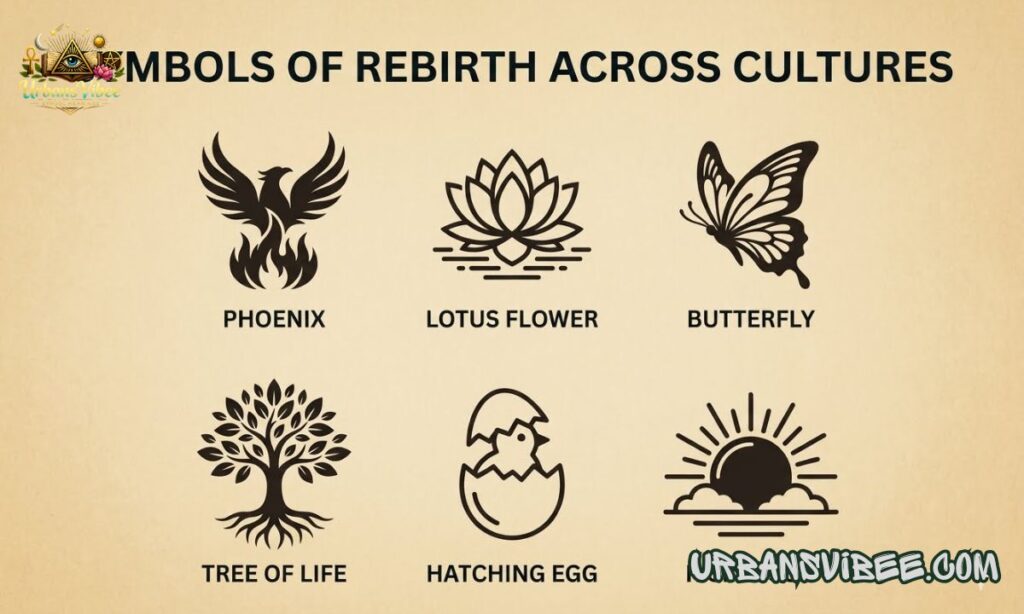
Ancient Egypt
Rebirth was the organizing principle of ancient Egyptian civilization. The entire burial system — mummification, the Book of the Dead, pyramid construction — was designed around ensuring successful rebirth after death.
Key Egyptian rebirth symbols include the scarab beetle, the lotus, the Ankh, and the Bennu bird (phoenix). The annual flooding of the Nile — which deposited rich soil and brought new life to the land — was itself treated as a cosmic rebirth, tied to the goddess Isis and the resurrection of Osiris.
Ancient Greece
Greek mythology is saturated with rebirth symbolism. Persephone’s annual descent into the underworld and return explains the seasons — when she is underground, the earth is barren; when she returns, it blooms.
The phoenix was adopted and elaborated by Greek writers. The Ouroboros appears in Greek alchemical texts. The butterfly was the symbol of Psyche — the soul — who undergoes death and resurrection in her mythological journey.
Hinduism
In Hinduism, rebirth (punarjanma) is a cosmological fact. The soul (atman) travels through countless lives, learning and evolving, until it achieves moksha (liberation). The lotus is the central rebirth symbol — Vishnu dreams the next universe into being while resting on a lotus in cosmic waters. The god Shiva holds the power to destroy and recreate the universe — destruction in service of renewal.
Buddhism
Buddhism teaches that rebirth is the natural consequence of unresolved karma. The lotus is the primary visual symbol — born in mud, blooming in sunlight, representing the soul’s capacity to rise from suffering into clarity. The dharma wheel represents the ongoing cycle of existence. The concept of Nirvana is itself a form of ultimate rebirth — freedom from the cycle of suffering, a final transformation into peace.
Indigenous Cultures
Indigenous traditions across the Americas, Africa, and Australia have rich rebirth symbolism centered on nature’s cycles. The eagle — whose annual molting renews its plumage and whose soaring represents connection to the divine — is a central rebirth symbol in many Native American traditions.
Seasonal ceremonies mark the death of winter and the rebirth of spring. The medicine wheel encodes the four directions, four seasons, and the cycle of life, death, and renewal in a single circular symbol.
Symbols of Rebirth in Art, Movies & Pop Culture
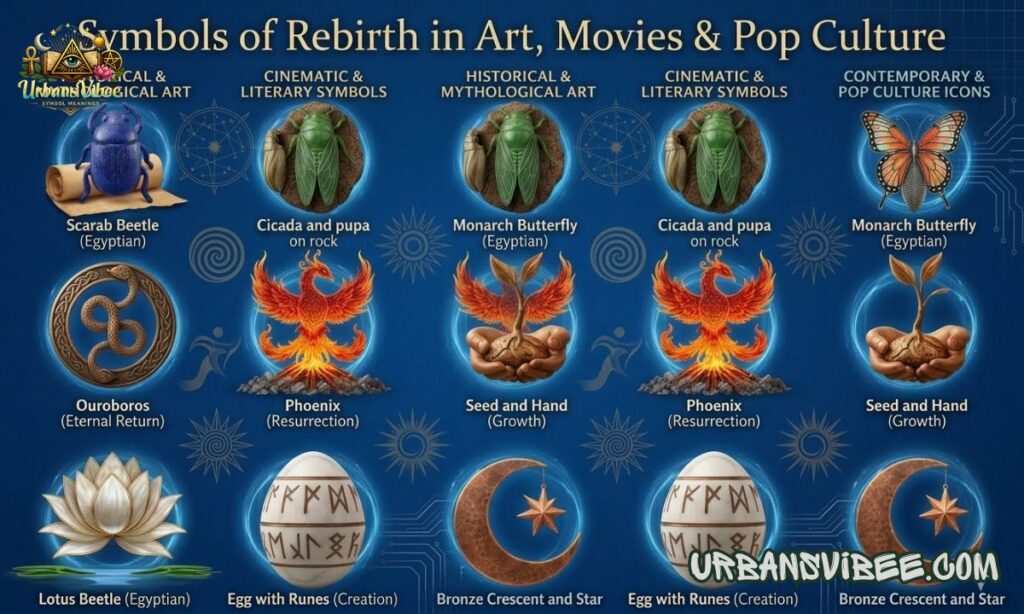
Rebirth symbols appear constantly in art, film, and popular culture — often so embedded in the narrative that viewers feel their power without consciously identifying the symbol:
- Movies: The Lion King (Simba’s rebirth as king), Harry Potter (Fawkes the phoenix as Dumbledore’s companion), The Matrix (Neo’s literal death and resurrection), Moana (Te Fiti’s restoration), and Black Swan (the dancer’s transformation)
- Literature: Rebirth symbolism runs through The Great Gatsby (Gatsby’s attempt to be reborn as a new man), Jane Eyre (Thornfield’s fire and Jane’s return), and countless fairy tales where the hero dies and is revived
- Art: The lotus appears in Buddhist and Hindu temple art across Asia. The phoenix appears in medieval European heraldry and in contemporary murals celebrating survival and community resilience
- Fashion and Jewelry: Phoenix pendants, ouroboros rings, lotus earrings, and butterfly necklaces are perennial bestsellers because people want to carry the energy of renewal on their bodies
Spiritual & Dream Meaning of Symbols of Rebirth
When rebirth symbols appear in dreams, they carry specific messages related to what is happening in the dreamer’s life:
- Phoenix in a dream — something is ending, but something better is coming. Do not fear the fire currently in your life
- Butterfly in a dream — transformation is underway, perhaps unconsciously. Something in you is dissolving before it can reform into something new
- Lotus in a dream — you are emerging from a difficult period. The beauty you are becoming is real, regardless of where you are growing from
- Snake shedding skin in a dream — an old identity, belief, or relationship is being outgrown. This is healthy, not dangerous
- Sunrise in a dream — a new chapter is beginning. Darkness is ending. What felt permanent is lifting
- Egg in a dream — great creative or personal potential is present. Something new is ready to hatch in your life
Positive vs Negative Meanings of Rebirth Symbols
Positive Meanings
- Hope — the conviction that something better follows every ending
- Resilience — the human capacity to survive and begin again
- Spiritual evolution — the soul grows through its experiences across lifetimes
- Personal transformation — the freedom to become someone different than who you were
- Natural wisdom — rebirth is encoded in nature itself, affirming that renewal is the universe’s default setting
Negative Meanings
- The pain of necessary endings — rebirth requires something to die first
- The temptation to remain in the chrysalis — transformation is uncomfortable; some people resist emerging
- Toxic positivity — rebirth symbolism can be misused to minimize genuine grief (“just rise like the phoenix!” dismisses real loss)
- Cultural appropriation — sacred rebirth symbols from indigenous and Eastern traditions are sometimes taken out of context for aesthetic use alone
- The shadow of impermanence — the same cycle that promises renewal also confirms that all good things will also end
Why Humans Are Drawn to Symbols of Rebirth
The reason is simple: every human being knows loss. Every person has experienced something ending that they did not want to end — a relationship, a version of themselves, a life chapter, a loved one. And every human being carries, somewhere inside, the desperate and reasonable need to believe that endings are not final.
Rebirth symbols give that need a form. They say: look at the phoenix. Look at the butterfly. Look at the lotus. Look at the sunrise. The pattern of ending and renewal is not your personal tragedy — it is written into the fabric of existence.
Carl Jung called rebirth one of the fundamental archetypes of the human unconscious — a pattern so deeply embedded in the psyche that it arises spontaneously in every culture that has ever existed. We are drawn to rebirth symbols because they speak to something ancient in us that knows the truth: we have survived endings before, and we will survive this one too.
Conclusion
Rebirth symbols are not ancient relics. They are living tools — as relevant today as they were five thousand years ago in the temples of Egypt, the burial mounds of Ireland, and the gardens of ancient India.
Every time you see a lotus, a phoenix, a butterfly, or a sunrise, you are looking at thousands of years of human testimony that life continues. That suffering refines rather than destroys. That every ending contains within it the seed of a beginning.
The next time you encounter one of these symbols — on a piece of jewelry, in a tattoo, in a painting, in the sky at dawn — pause for a moment. Something ancient is reminding you of something true: you are not finished yet. You are becoming.
Frequently Asked Questions
What is the most powerful symbol of rebirth?
The phoenix is widely considered the most powerful and universal symbol of rebirth — it burns completely and rises again, representing total transformation and renewal.
What is the Egyptian symbol for rebirth?
The scarab beetle (Khepri) is ancient Egypt’s primary rebirth symbol, representing the daily renewal of the sun. The Ankh, lotus flower, and Bennu bird also carry strong rebirth symbolism in Egyptian mythology.
What does the lotus flower symbolize in rebirth?
The lotus symbolizes the ability to rise above difficulty and be reborn into beauty — it grows from muddy water and blooms pure and radiant above the surface, representing spiritual awakening and renewal.
What is the Celtic symbol for rebirth?
The Triskele (Triple Spiral) is the primary Celtic symbol of rebirth, representing the three stages of birth, death, and renewal. The Celtic serpent also represents rebirth through its annual shedding of skin.
What does a snake symbolize in rebirth?
The snake’s skin-shedding makes it a universal symbol of rebirth and renewal — leaving behind the old self to emerge renewed, larger, and free of what was holding growth back.
What color represents rebirth?
Green is the primary color associated with rebirth because it represents growth, new life, and nature’s renewal after winter. Gold and yellow also symbolize rebirth, representing the sun’s return.
What does the butterfly symbolize in rebirth?
The butterfly’s metamorphosis — from earthbound caterpillar to flying creature — makes it a perfect symbol of transformation and rebirth. In ancient Greek, the word psyche means both “soul” and “butterfly.”
What are good rebirth tattoo symbols?
Popular rebirth tattoo symbols include the phoenix, lotus, butterfly, ouroboros, triskele, and serpent — often chosen to mark personal transformation after significant life events.

Stephen Miller is a language enthusiast and symbol researcher at UrbansVibee. He specializes in uncovering the meanings, origins, and cultural significance of symbols, helping readers understand signs, icons, and symbolism from around the world.