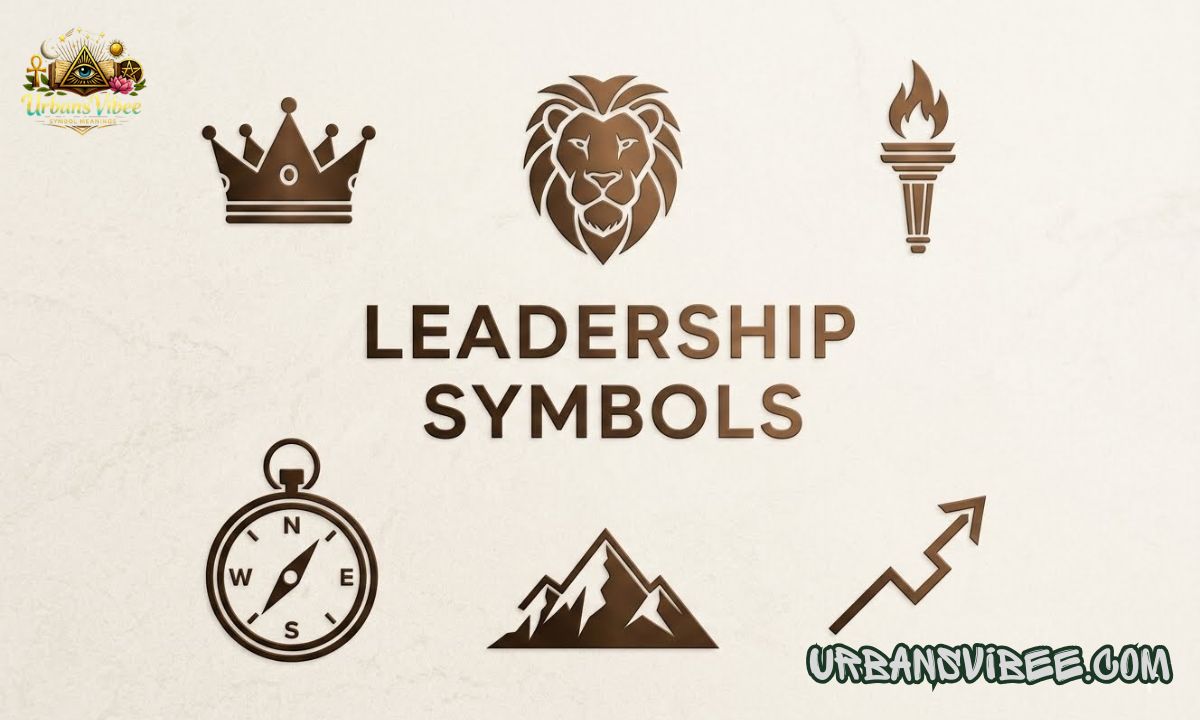
Throughout human history, leaders have never relied on words alone. They used symbols — powerful, visual, emotionally charged images — to communicate authority, inspire loyalty, and define their identity.
From the pharaoh’s golden crown to the eagle on a military badge, leadership symbols have shaped civilizations, wars, movements, and modern brands alike.
This guide dives deep into the most iconic and meaningful leadership symbols ever recorded, why they still matter today, and how you can use this symbolism to grow as a leader.
What Are Leadership Symbols?
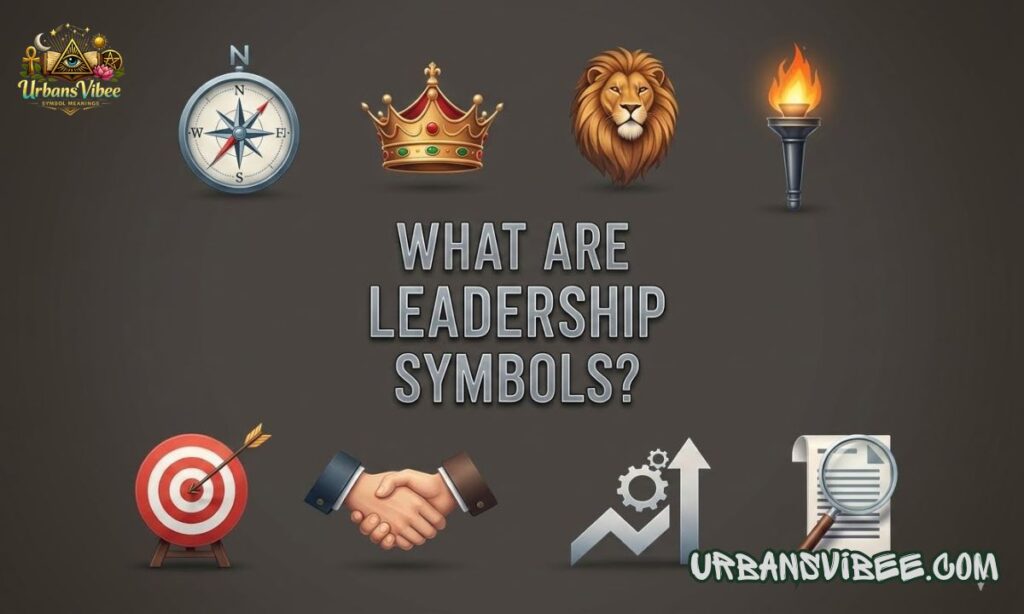
A leadership symbol is any object, animal, image, color, or design that societies collectively recognize as a marker of authority, strength, guidance, or power. These symbols work instantly — no explanation needed. When someone sees a crown, a throne, or a lion, the message is understood without a single word spoken.
As Scott Jeffrey’s research notes, symbols move people in ways that thoughts and words cannot. Feelings, emotions, and images are what truly influence human behavior — and leadership symbols tap directly into that psychological truth.
Leadership Symbols And Meanings Across Cultures And History
Across every civilization, symbols of leadership carried deep meaning tied to that culture’s values, religion, and social structure.
| Culture | Key Leadership Symbol | Core Meaning |
| Ancient Egypt | Crook & Flail, Ankh | Divine kingship, cosmic order |
| Ancient Greece | Laurel Wreath, Scepter | Earned honor, divine power |
| China | Dragon, Imperial Seal | Wisdom, cosmic harmony |
| Medieval Europe | Crown, Coat of Arms | Hereditary authority, divine right |
| Modern Society | Logo, Badge, Flag | Institutional trust, identity |
Symbols Of Leadership With Meaning
Here are the core leadership symbols, each carrying a distinct and powerful meaning:
- Crown — Sovereignty and ultimate authority
- Lion — Courage, strength, and natural dominance
- Eagle — Vision, freedom, and strategic thinking
- Throne — Established power and permanence
- Staff or Scepter — Guidance, moral authority, and command
- Flag — Collective identity, unity, and shared purpose
- Sword — Justice, decisiveness, and strength
- Laurel Wreath — Earned honor and intellectual leadership
- Olive Branch — Diplomatic leadership and peaceful resolution
- Scales of Justice — Ethical, balanced, and fair leadership
- Oak Tree — Endurance, wisdom, and long-term strength
- Torch — Knowledge, enlightenment, and inspiration
- Ankh — Life, spiritual power, and divine leadership
- Dragon — Transformational power, wisdom, and cosmic authority
- Phoenix — Resilience, renewal, and the ability to rise from failure
Symbols Of Leadership In Education
In academic settings, specific symbols carry profound leadership meaning:
- Graduation Cap and Gown — Achievement and the transition into leadership roles
- Torch — The transfer of knowledge from one generation to the next
- Eagle — Vision, courage, and the pursuit of excellence
- Key — Access to knowledge and the opening of new opportunities
- Scales — Academic fairness, integrity, and balanced judgment
Symbols Of Leadership
At their core, leadership symbols serve three functions. First, they communicate who holds authority. Second, they inspire those who follow. Third, they reinforce the values and identity of a group, organization, or nation. Whether displayed on a flag, worn as a badge, tattooed on skin, or embedded in a corporate logo, these symbols do the work that language cannot always accomplish.
Visual And Creative Leadership Symbol Designs
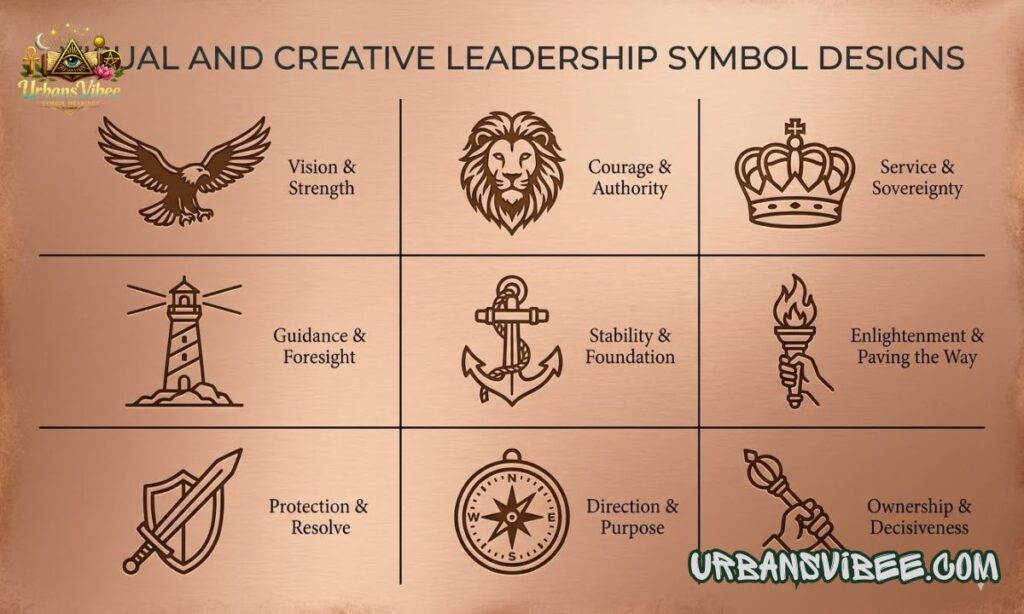
Symbol Of Leadership Images
Visually, leadership symbols follow recognizable patterns. The most enduring designs share common traits: bold, clean lines; strong silhouettes; and imagery borrowed from nature, religion, or ancient history. Think of the double-headed eagle, the roaring lion, or the rising phoenix — all instantly readable as symbols of power.
Pictures Of Leadership Symbols
In art and design, leadership is often communicated through:
- Elevated positioning (the leader stands higher, sits on a raised throne)
- Scale contrast (the leader is drawn larger)
- Light and halo effects (suggesting divine or moral authority)
- Regalia and objects (crowns, scepters, robes)
Leadership Symbols Images
When searching for leadership symbol images, the most universally recognized visuals include the crown, the lion, the eagle, the laurel wreath, the staff, the throne, and the flag. These appear across every culture and era because they tap into universal human psychology about strength, guidance, and authority.
Leadership Symbols Black And White
In black and white design — especially in tattoos, logos, and emblems — leadership symbols gain a timeless, authoritative quality. The stark contrast emphasizes form and meaning without distraction. Lions, crowns, eagles, and swords are among the most popular black-and-white leadership symbol designs.
Leadership Symbols Clip Art
For design and educational use, common clip art versions of leadership symbols include the crown, eagle, laurel wreath, lion, trophy, torch, and star. These simplified versions make the symbols instantly accessible for presentations, posters, and educational materials.
Leadership Symbol Designs In Art And Personal Expression
Leadership Symbol Drawing
Artists have long used leadership symbols in drawing and illustration to convey power dynamics. Classical oil paintings used posture, scale, and regalia. Modern illustrators use bold geometry, animal imagery, and elemental forces like fire, water, and light to communicate leadership energy.
Leadership Symbol Tattoo
Tattoo culture has embraced leadership symbols deeply. The most popular leadership symbol tattoos include:
- Lion — Courage, strength, and authority (the most universally chosen)
- Eagle — Freedom, vision, and power
- Crown — Sovereignty and self-mastery
- Sword — Justice and decisive action
- Phoenix — Personal transformation and resilience
- Wolf — Pack leadership, loyalty, and intelligence
- Elephant — Wisdom, stability, and protective leadership
Logo Leadership Symbols
Corporate logos function as modern leadership symbols. The Apple logo symbolizes knowledge and creativity. The Mercedes-Benz three-pointed star represents command over land, sea, and air. Southwest Airlines’ heart communicates servant leadership. Every strong brand logo borrows, consciously or unconsciously, from the ancient grammar of leadership symbolism.
Historical And Cultural Leadership Symbols
Ancient Symbols Of Leadership
Ancient leadership symbols were inseparable from religion and divine authority:
- The Ankh (Egypt) — Life, divine authority, and spiritual power
- The Pharaoh’s Crook and Flail — Guidance and justice over the people
- The Fasces (Rome) — Collective strength and imperial authority
- Zeus’s Thunderbolt (Greece) — Divine power and commanding force
- The Sphinx — Intellectual power combined with physical strength
Ancient Leadership Symbols
Native American rock art also preserved leadership symbols. One ancient symbol — a horizontal baseline with a central vertical line and two V shapes — directly represented a person with the wisdom and ability to lead others. These petroglyphs, some dating to 3000 BC, confirm that visual leadership symbolism is among humanity’s oldest communication tools.
Coat Of Arms Leadership Symbols
Medieval coats of arms were purpose-built leadership symbol systems. Every element carried meaning:
- Lions — Bravery and royal authority
- Eagles — Military strength and imperial power
- Colors — Gold for generosity, red for military strength, blue for loyalty
- Crowns and Helmets — Rank and social hierarchy
- Shields — Protection and defensive leadership
Objects And Things That Represent Leadership
Objects That Represent Leadership
Physical objects that carry strong leadership symbolism include:
- Crown and scepter
- Sword and shield
- Staff or rod
- Throne
- Military medals and badges
- Scales of justice
- Imperial seal or signet ring
- Torch
Objects That Represent Leadership Styles
Different leadership styles map to different objects:
- Authoritative Leadership — Crown, throne, scepter
- Servant Leadership — Heart, open hands, torch
- Strategic Leadership — Chess pieces, compass, map
- Transformational Leadership — Phoenix, flame, seed
Items That Represent Leadership
Beyond traditional regalia, modern items have become leadership symbols: the boardroom seat at the head of the table, the podium, the corner office, the branded uniform, and even the TED Talk stage.
Things That Symbolize Leadership
Leadership symbolism extends into everyday life. A mentor’s advice is symbolically a “torch passed.” A promotion is a symbolic “crown.” A team’s flag at a competition represents collective leadership and identity.
Things That Represent Leadership
Across history and culture, these things consistently represent leadership: fire (inspiration and energy), water (adaptability and flow), mountains (endurance and perspective), and storms (the power to navigate chaos).
Leadership Symbols In Power, Strength, And Control
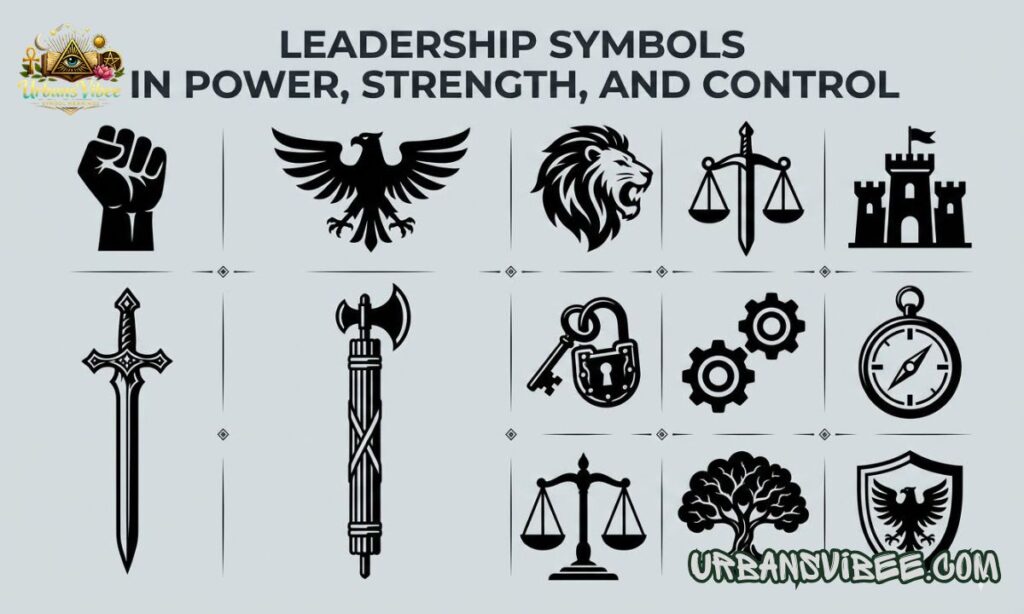
Leader Symbols
The most powerful leader symbols combine multiple meanings simultaneously. The crown is not just about beauty — it represents the weight of responsibility. The lion is not just about strength — it represents the duty to protect. The eagle is not just about freedom — it symbolizes the long-range vision a leader must maintain.
Symbol Of A Leader / Symbol Of Leader
Historically, the single most universal symbol of a leader is the crown, followed closely by the scepter and the throne. Together, these three form the classical triumvirate of leadership symbolism that crosses nearly every culture on earth.
Symbol For Leadership / Symbols For Leadership
Modern leadership programs and organizations often use:
- The compass — representing direction and purpose
- The lighthouse — guiding others through uncertainty
- The anchor — stability and grounding under pressure
- The handshake — collaborative and servant leadership
Symbols That Represent Leadership
A complete leadership symbol library would include:
Natural Symbols — Lion, Eagle, Wolf, Elephant, Dragon, Phoenix, Oak Tree Object Symbols — Crown, Scepter, Sword, Staff, Throne, Torch, Scales Cultural Symbols — Laurel Wreath, Ankh, Tabono, Hamsa, Coat of Arms Modern Symbols — Corporate Logo, Badge, Flag, Medal, Chess King
Leadership Symbolism / Symbolism For Leadership
Leadership symbolism functions as a universal language. It transcends literacy, language barriers, and even time periods. A symbol used by an Egyptian pharaoh 3,000 years ago still communicates authority today because it taps into something deeply wired in human psychology.
Specialized Leadership Symbol Categories
Symbols That Represent Control
The symbols most associated with control and decisive authority include: the scepter, the throne, the gavel, the crown, and military rank insignia. Each of these represents not just power — but the legitimate, recognized right to exercise it.
Strength Leadership Symbols
Pure strength in leadership symbolism is most commonly expressed through:
- The lion (raw, natural strength)
- The bear (powerful, protective strength)
- The bull (determined, unstoppable force)
- The thunderbolt (sudden, decisive strength)
- The fist (collective strength and solidarity)
Military Leadership Symbols
Military leadership has its own rich symbolic tradition:
- Medals and decorations — Earned authority through demonstrated courage
- Rank insignia — Hierarchical leadership and chain of command
- The eagle — Strategic vision and national authority
- The sword — Justice, decisiveness, and martial leadership
- The flag — Unity, sacrifice, and collective identity
In ancient Greece, military commanders wore laurel wreaths as their mark of leadership authority. In medieval Europe, it was armor, sword, and shield. Today, it’s the uniform, the badge, and the medal.
Servant Leadership Symbols
Servant leadership — the model that prioritizes others over self — has its own emerging symbol vocabulary:
- The heart — Compassion, care, and emotional intelligence
- Open hands — Service, generosity, and support
- The torch — Mentorship and passing knowledge forward
- The bridge — Connecting people and building common ground
- Water — Adaptability and nourishing those around you
Leadership Symbols Animals
The animal kingdom provides some of the most enduring leadership symbols:
| Animal | Leadership Quality |
| Lion | Courage, authority, protection |
| Eagle | Vision, freedom, strategic thinking |
| Wolf | Pack leadership, loyalty, intelligence |
| Elephant | Wisdom, memory, nurturing strength |
| Dragon | Transformational power, cosmic wisdom |
| Phoenix | Resilience and renewal |
| Bear | Protective strength and groundedness |
| Falcon | Speed, focus, and divine connection |
Leadership Symbols Media And Visual Resources
Symbol Of Leadership Images / Leadership Symbols And Meanings
For visual research on leadership symbols, the richest sources include heraldry databases, museum collections of ancient regalia, military insignia archives, and corporate logo design histories. Each of these tracks how the same core symbols — crown, lion, eagle, sword — have been adapted across centuries.
Leadership Symbols Clip Art
For presentations and educational materials, simplified clip art versions of leadership symbols maintain their communicative power. A minimalist crown or a geometric lion still triggers the same psychological associations as their elaborate historical counterparts.
Deep Symbolic Meaning of Leadership Symbols
Spiritual Meaning
On a spiritual level, leadership symbols often carry divine associations. Symbols like halos, sacred light, and divine animals — such as the falcon of Horus or the eagle of Zeus — suggested that the leader held a direct connection to higher powers. This spiritual dimension gave leaders not just earthly authority but cosmic legitimacy.
Psychological Meaning
Psychologically, leadership symbols trigger feelings of trust, safety, and order. When people are uncertain or afraid, symbols of leadership reassure them that someone capable is in charge. The human brain is wired to seek certainty — and visible symbols of leadership reduce anxiety by making authority visible and recognizable.
Cultural Meaning
Culturally, leadership symbols define social hierarchy and structure. They help entire societies function by clarifying roles, expectations, and boundaries. Without visible symbols of leadership, authority becomes invisible — and therefore fragile.
Types and Variations of Leadership Symbols
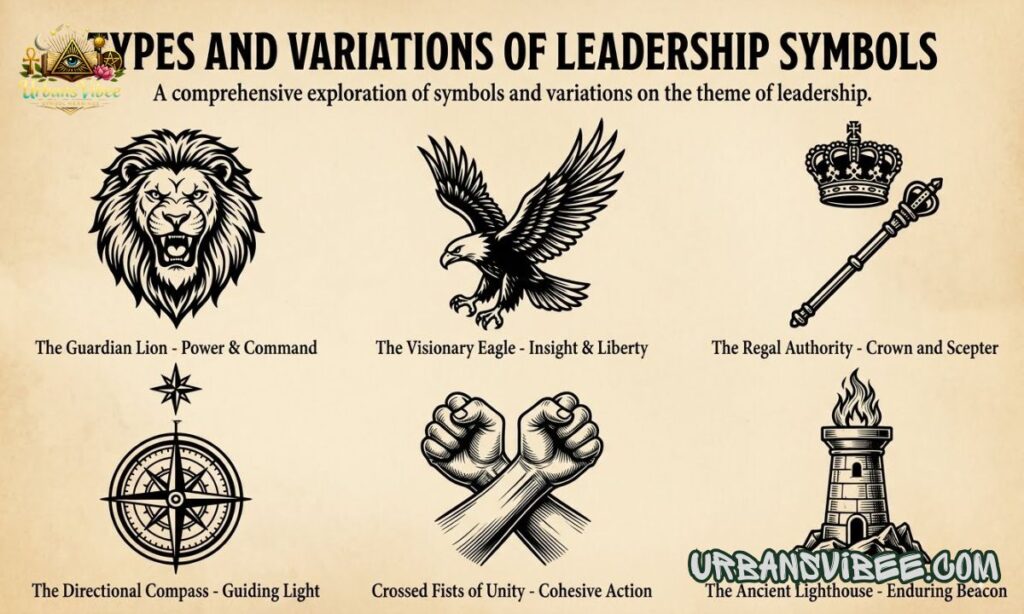
Crown
Visual: A circular headpiece, typically gold and jeweled Meaning: Sovereignty, ultimate authority, and legitimacy Appears In: Monarchies, mythology, religion, and modern logos
Lion
Visual: A powerful, fearless animal Meaning: Courage, natural leadership, and protective strength Appears In: Heraldry, national flags, dreams, and tattoos
Eagle
Visual: A large bird of prey with commanding wingspan Meaning: Vision, freedom, and strategic authority Appears In: National emblems, military insignia, and corporate logos
Throne
Visual: An elevated, decorated seat of power Meaning: Established, permanent authority Appears In: Monarchies, mythology, and religious settings
Staff or Scepter
Visual: A long rod, often topped with a symbolic element Meaning: Guidance, command, and moral authority Appears In: Ancient rulers, prophets, and spiritual leaders
Flag
Visual: Fabric bearing colors or emblems Meaning: Collective leadership, unity, and shared identity Appears In: Nations, movements, and revolutions
Leadership Symbols Across Cultures
Ancient Egypt
Pharaohs used crowns, the crook and flail, and sacred animal symbols to demonstrate divine kingship. Leadership in Egypt meant maintaining Ma’at — cosmic order and balance. The Ankh symbolized the life-giving power of the leader, while the Sphinx represented the intellectual and physical strength required to rule.
Ancient Greece
Laurel wreaths symbolized leadership earned through wisdom or military victory, not simply through birth. The Greek model was meritocratic in its symbolism — you had to earn your wreath. The scepter of Zeus represented divine authority, but the wreath was a symbol the people awarded to their best.
China
The dragon represented imperial authority, wisdom, and cosmic balance. Chinese leadership symbolism was deeply tied to harmony — the emperor was seen as the link between heaven and earth. The Imperial Jade Seal, engraved with the emperor’s name, was the ultimate authenticator of legitimate authority.
Medieval Europe
Crowns, coats of arms, and thrones reinforced hereditary power and the divine right of kings. The fleur-de-lis represented French royalty. Heraldic shields told complete leadership stories — your family, your battles, your values, all encoded in color and symbol.
Modern Society
Today, logos, uniforms, badges, and titles function as leadership symbols in politics, corporations, and social movements. Apple’s bitten apple, Nike’s swoosh, and the Presidential Seal are all modern descendants of the ancient grammar of leadership symbolism.
Leadership Symbols in Art, Movies and Pop Culture
In cinema, leadership is consistently communicated through symbolic visual language. Crowns appear in fantasy epics like The Lord of the Rings. Capes signal leadership in superhero films. Military uniforms in war dramas instantly establish hierarchy and authority.
In classical painting, artists used posture, light, scale, and positioning to mark the leader in any scene. The figure standing highest, illuminated most brightly, or centrally framed was the leader — no label required.
In tattoo culture, the crown, lion, eagle, and sword remain the most popular leadership symbol choices because they communicate strength, purpose, and authority with a single image.
Spiritual and Dream Meaning of Leadership Symbols
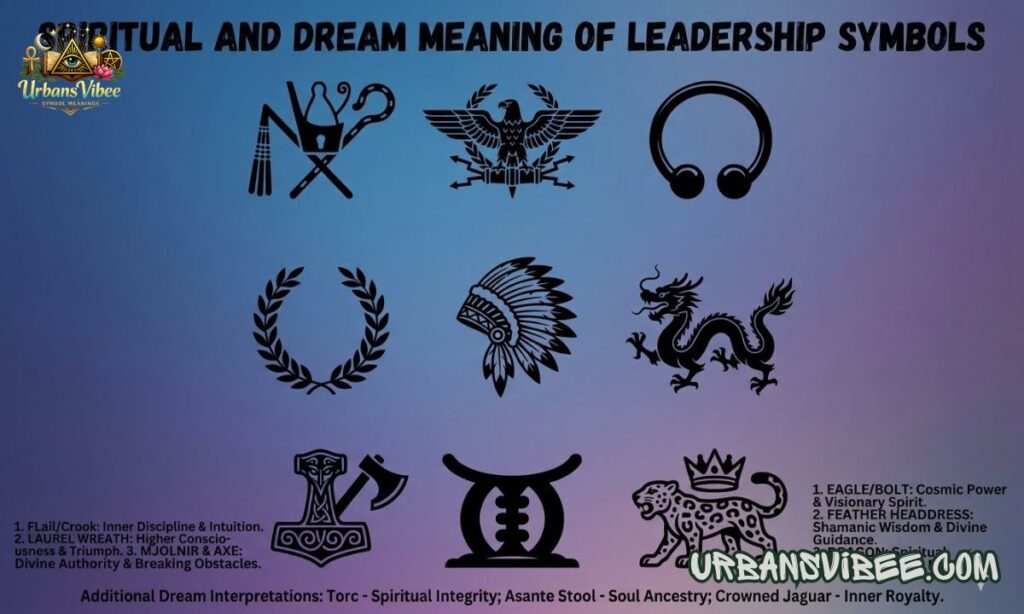
When leadership symbols appear in dreams, they often carry personal significance. A crown in a dream may signal an emerging sense of personal authority or responsibility. A lion appearing in dreams is widely interpreted as the awakening of inner courage and leadership qualities. An eagle often signals the need to gain a higher perspective on a challenging situation.
Spiritually, these symbols remind us that leadership is not just about external authority — it is about the inner qualities of character, wisdom, service, and courage that make genuine leadership possible.
Positive vs Negative Meaning of Leadership Symbols
Positive Meaning:
- Crown → Responsibility, service, and the privilege of leading
- Lion → Protector of the community
- Eagle → Clear vision and strategic wisdom
- Staff → Guiding and supporting those who follow
- Flag → Inspiring collective action toward a shared goal
Negative Meaning:
- Crown → Arrogance, entitlement, and abuse of power
- Throne → Isolation from those being led
- Sword → Aggression and domination
- Iron Fist → Control through fear rather than inspiration
- Military Regalia (misused) → Authoritarianism and blind obedience
The same symbol can represent the best or worst of leadership, depending entirely on how the leader who carries it chooses to act.
Why Humans Are Drawn to Leadership Symbols
The answer lies in evolutionary psychology. Human beings are social creatures who depend on clear hierarchies for survival. In uncertain times — war, famine, social upheaval — visible symbols of leadership reduce anxiety and create social cohesion. When we see a recognizable symbol of authority, our brain interprets it as: someone capable is in charge, and there is order here.
This is why the greatest leaders throughout history — from Egyptian pharaohs to modern CEOs — have always understood the power of symbols. They are not mere decoration. They are the visual language of trust, authority, and belonging.
Conclusion
Leadership symbols are far more than historical artifacts or decorative designs. They are a living language, continuously evolving while remaining rooted in timeless human psychology. Whether it is the lion’s courage, the eagle’s vision, the crown’s responsibility, or the torch’s light of knowledge — these symbols communicate what words often fail to express.
Understanding them makes you a more self-aware, culturally intelligent, and visually fluent leader. The greatest leaders in history were also great symbol-wielders. Now you have the key to that ancient vocabulary.
Frequently Asked Questions
What is the most universal symbol of leadership?
The crown is the most universally recognized leadership symbol across cultures and history, representing authority, responsibility, and sovereignty.
What animal best symbolizes leadership?
The lion is most commonly associated with leadership, representing courage, strength, and the protective instinct of a natural leader.
What do leadership symbols mean in dreams?
Dreaming of leadership symbols like crowns or lions typically signals emerging personal authority, growing responsibility, or an inner call to step into a leadership role.
What is a modern symbol of leadership?
In modern contexts, the compass, lighthouse, and corporate logo function as leadership symbols, representing direction, guidance, and institutional identity.
What is the difference between old and new leadership symbols?
Ancient symbols like crowns and scepters reflected hierarchical, power-based leadership. Modern symbols like the heart and open hands reflect servant, collaborative, and empathetic leadership models.
Are leadership symbols used in tattoos?
Yes, the lion, crown, eagle, sword, and phoenix are among the most popular leadership symbol tattoo choices, each representing a distinct aspect of strength and authority.
What do military leadership symbols represent?
Military leadership symbols — medals, rank insignia, eagles, and flags — represent earned authority, courage, chain of command, and collective sacrifice.

Stephen Miller is a language enthusiast and symbol researcher at UrbansVibee. He specializes in uncovering the meanings, origins, and cultural significance of symbols, helping readers understand signs, icons, and symbolism from around the world.