Most people can name Zeus, Athena, or Poseidon without blinking. But Hestia? She quietly sits at the center of it all, tending the flame that kept ancient civilization alive.
She is the Greek goddess of the hearth, home, and sacred fire — and her symbols carry meaning that still echoes in our daily lives today.
From the candle you light at dinner to the warmth you feel walking through your front door, Hestia’s energy is everywhere.
What Are Hestia Symbols?
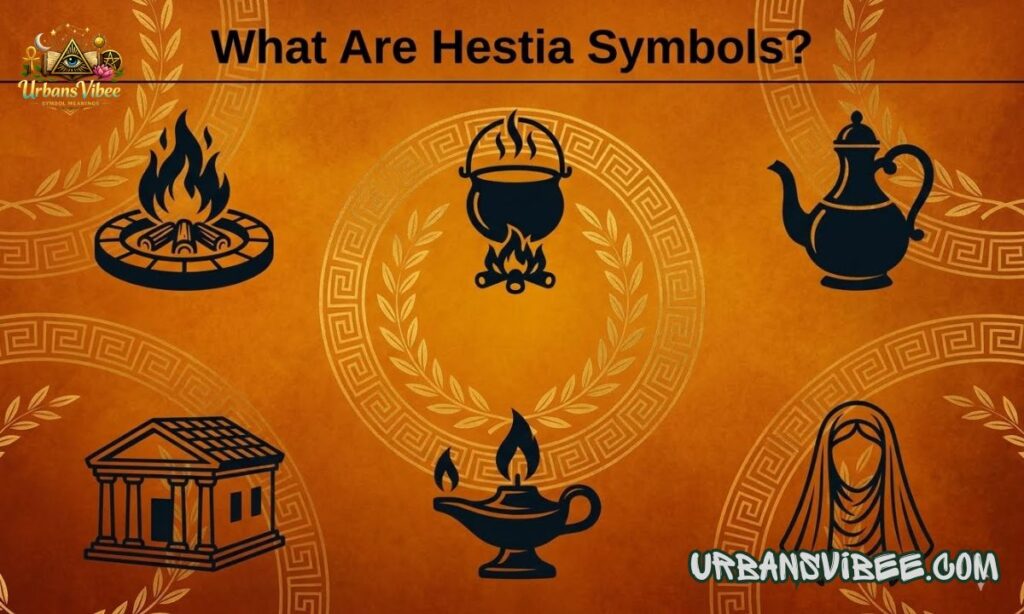
Hestia symbols are sacred objects, images, and concepts directly tied to the Greek goddess of the hearth and domestic life. These are not flashy weapons or battle shields. They are humble, grounding, and deeply human.
The hearth fire, the cooking pot, the circle, the veil — each one tells a story about peace, protection, and the sacredness of home. In ancient Greece, no meal began and no ritual ended without honoring Hestia through these symbols.
Historical Background
Hestia was the firstborn child of the Titans Cronus and Rhea, making her the eldest of the original Olympians. Her siblings include Zeus, Hera, Poseidon, Hades, and Demeter. When Cronus swallowed his children fearing a prophecy, Hestia was the first consumed — and the last released, which gave her a position of deep honor in the divine family.
Unlike most Olympians, Hestia never entered wars, love affairs, or political schemes. Both Apollo and Poseidon sought to marry her, but she refused both and asked Zeus to grant her eternal virginity. He agreed, and she took her place beside the sacred hearth at Mount Olympus.
Her name in ancient Greek directly translates to “hearth” or “fireplace.” This etymology roots her entirely in the domestic world. She was not worshipped through grand temples but through the quiet flame burning in every Greek home.
Hidden Power Of Hestia Symbols
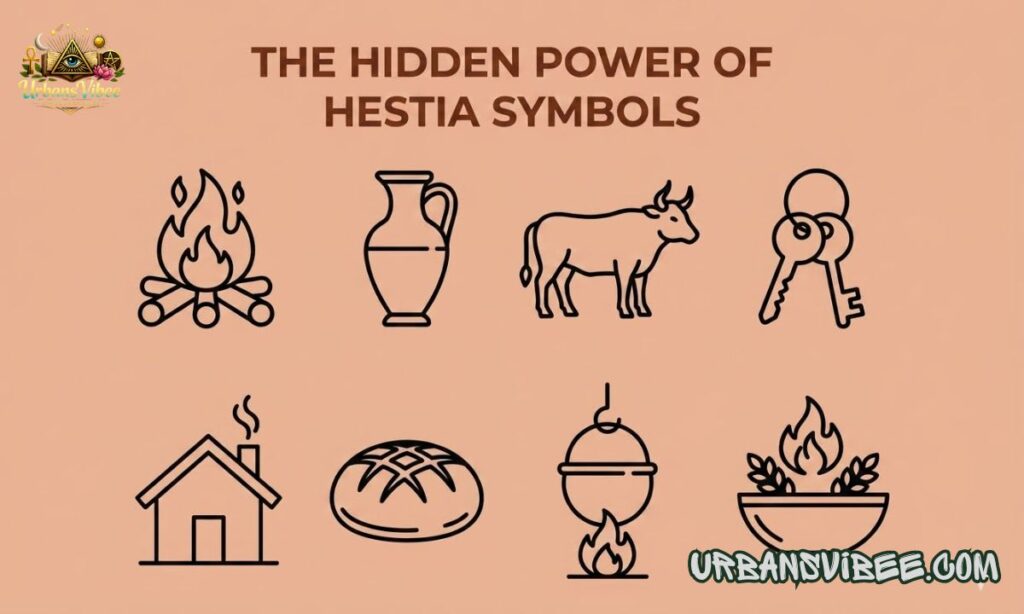
Hestia’s power was not dramatic, but it was constant. While Ares brought war and Aphrodite brought desire, Hestia brought something rarer — stability.
Her symbols hold that same quiet strength. They remind us that the home is a sacred space, not just a shelter. Every time the hearth fire burned, it was a living symbol of Hestia’s protection over the family inside.
Ancient Greek colonies, when founding new cities, would carry fire from the mother city’s public hearth. This act connected them to Hestia and symbolized continuity of culture, community, and divine blessing.
Hestia Symbols And Meanings
Here is a look at the core Hestia symbols and what they represent:
| Symbol | Meaning |
| Sacred Flame | Protection, continuity, divine presence |
| Hearth | Home, family unity, warmth |
| Circle | Eternity, wholeness, unbroken peace |
| Veil | Virginity, modesty, inner power |
| Kettle or Pot | Nourishment, domestic care, sustenance |
| Chaste Branch | Purity, simplicity, sacred commitment |
Hestia Symbols And Animals
Hestia was not strongly associated with many animals, which fits her gentle and understated nature. The pig was the most common sacred animal connected to her because it was used in household sacrifices and domestic rituals.
The cow, particularly young calves, was also offered to her. Some sources also mention the donkey as a protective symbol tied to home and domestic work. These animals were not fierce or mythical — they were everyday creatures, just like Hestia herself.
Hestia Goddess
Hestia is described as kind, mild, compassionate, and deeply devoted. She never appears in myths as an aggressor or a schemer. She is simply present — at the hearth, at every meal, at every ritual.
Her role was to maintain peace among gods and humans alike. In the civic life of ancient Greece, every prytaneum (government hall) had a sacred hearth dedicated to Hestia. She was the spiritual anchor of both the private home and the public community.
Hestia Sacred Animal
The pig holds the primary position as Hestia’s sacred animal. It was a common offering at household altars across ancient Greece. The cow was also sacrificed in her honor. These were not exotic offerings but everyday domestic animals — a reflection of her connection to simple, grounded life.
Hestia Facts
- She was the first Olympian swallowed by Cronus and last to be freed.
- She refused marriage proposals from both Apollo and Poseidon.
- The first and last offerings of wine at every feast were reserved for her.
- Every home in ancient Greece had a hearth altar to Hestia.
- In Rome, she was worshipped as Vesta, with the Vestal Virgins tending her eternal flame.
- She rarely appears in Greek art because she was everywhere, not in one place.
- Greek colonies carried fire from the mother city to honor Hestia in new settlements.
Symbols Of Hestia
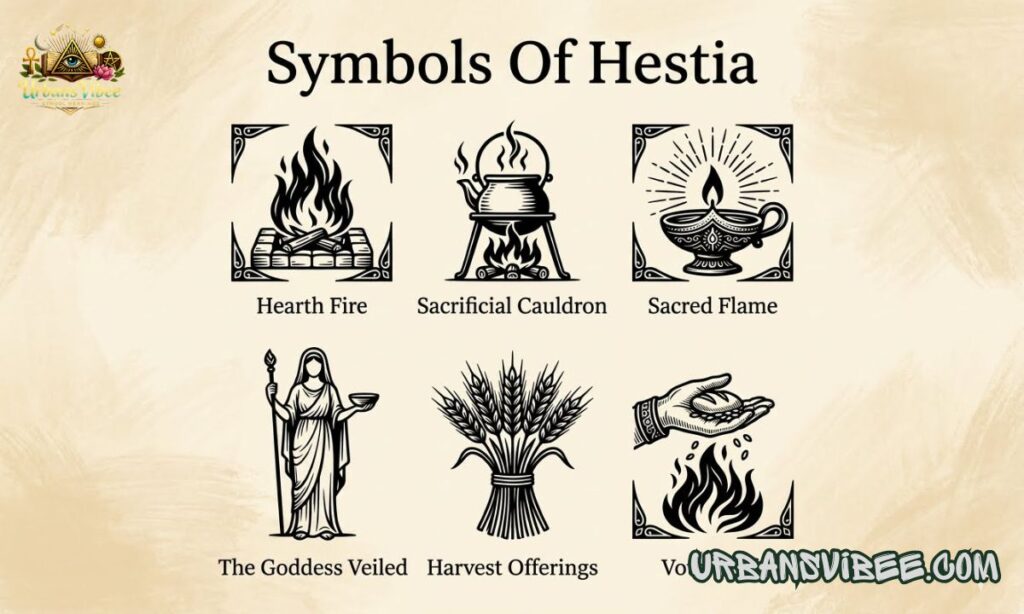
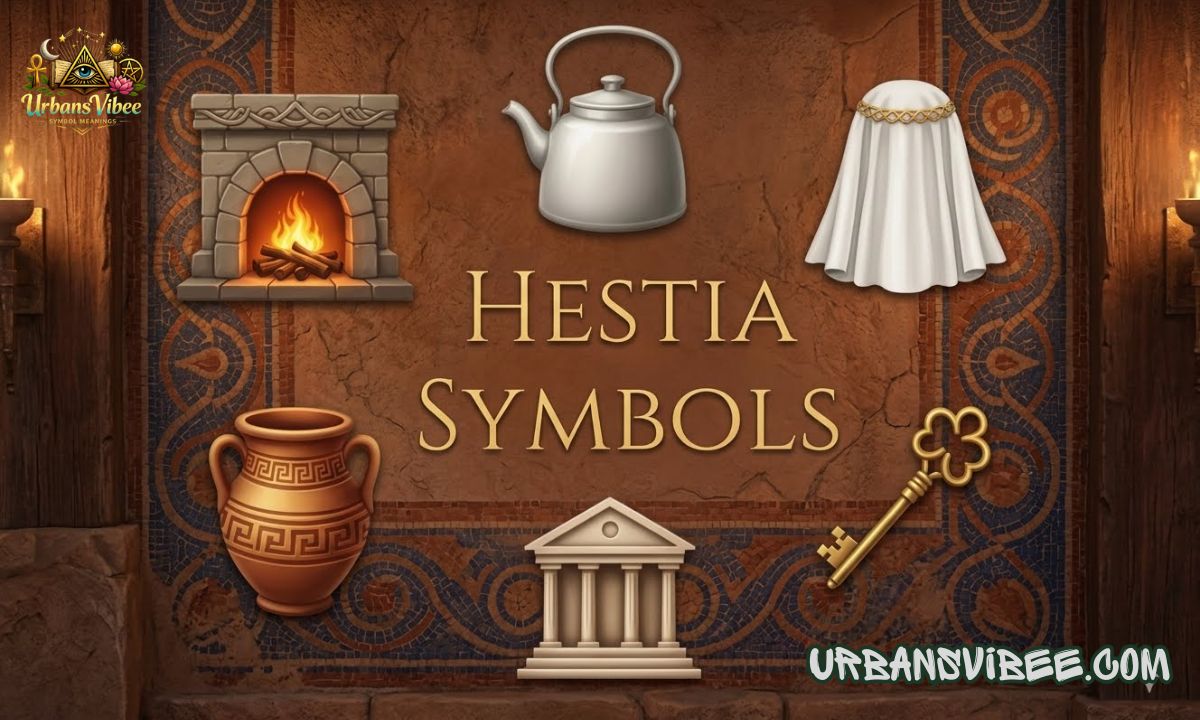
The most recognized Hestia symbols are the eternal flame and the hearth. Beyond these, the circle reflects her unbroken nature. The veil shown in artistic depictions highlights her vow of purity. The kettle or cooking pot links her to nourishment.
Some ancient images also showed her holding a flowered branch, representing growth and domestic harmony. Together, these symbols paint a picture of a goddess who found power not in conquest but in care.
Hestia Friends
Hestia was on peaceful terms with all the Olympians but kept to herself more than most. Her closest spiritual allies were Athena and Artemis — the other two virgin goddesses. She was also respected by Zeus, who honored her request for eternal virginity and gave her a position of permanence at the divine hearth.
Dionysus is sometimes mentioned in mythology as the deity who took her seat at the Olympian table, though the story reflects her generous nature rather than a demotion.
Hestia Offerings
Ancient Greeks honored Hestia with specific offerings:
- First and last pourings of wine at every feast
- Portions of grain, olive oil, and bread
- Pig and cattle sacrifices at household altars
- The best portion of food from every meal
- Prayers and hymns at the start and end of every ritual
These offerings were acts of gratitude for the warmth, safety, and nourishment Hestia provided.
What Are Hestia’s Powers?
Hestia held three primary powers. First, the protection of the home — she guarded every household that honored her flame. Second, the maintenance of the sacred fire — she kept the eternal flame burning on Olympus and in every Greek hearth.
Third, the creation of communal harmony — she fostered peace and unity within families and civic communities. She could bless homes, keep families united, and purify spaces through the sacred fire.
Greek Goddess Hestia Symbols Explained
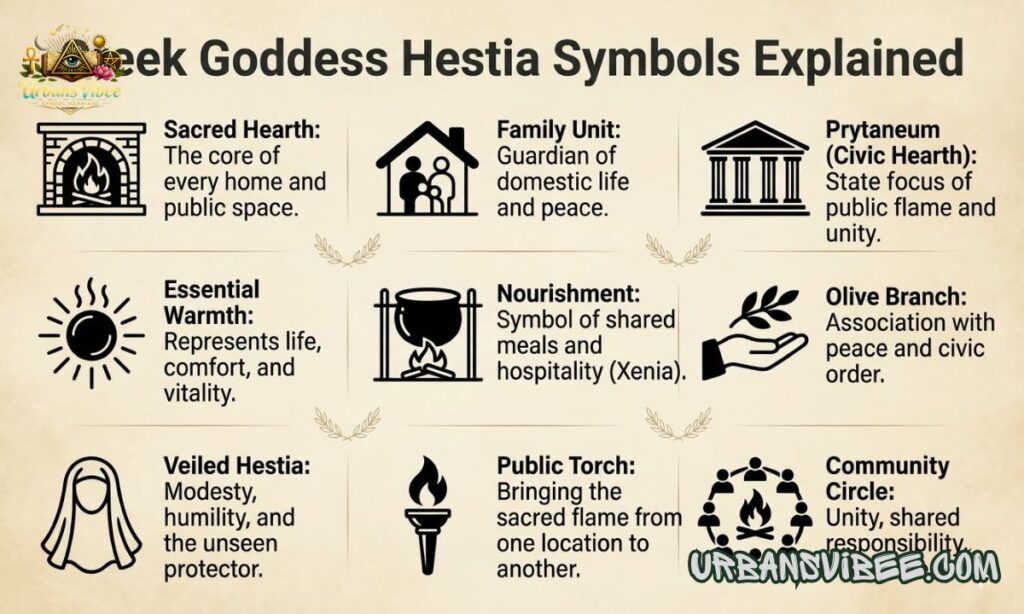
Each Hestia symbol holds a layer of meaning that goes deeper than the surface. The flame is not just fire — it is life itself, constant and enduring. The hearth is not just stone and ash — it is the emotional center of the household.
The circle is not just a shape — it is the eternal cycle of care that holds a family together. Understanding these symbols means understanding what Hestia stood for: quiet strength, sacred simplicity, and the divine nature of home.
What Are Hestia Symbols?
At their core, Hestia symbols represent the idea that the home is sacred. They are symbols of protection without weapons, of power without drama.
In a pantheon full of gods fighting for dominance, Hestia’s symbols stood apart because they asked for nothing except a burning flame and a grateful heart.
Hestia Symbols And Powers
Her symbols are directly linked to her powers. The flame represents her ability to protect and sustain life. The hearth reflects her role in maintaining emotional and spiritual harmony. The kettle symbolizes her power over nourishment and domestic well-being.
The circle connects to her eternal, unbroken presence. Together, these symbols make up a complete picture of a goddess who was everywhere at once and never sought recognition for it.
What Is the Hestia Symbol?
The single most recognized symbol of Hestia is the eternal flame. It burns without end, represents continuity and divine protection, and is kept alive in every Greek home and public hall as a daily act of worship.
Hestia Symbols Greek Mythology
In Greek mythology, Hestia’s symbols stood apart from the rest. Most gods were symbolized by weapons, animals, or celestial bodies. Hestia’s symbols were domestic.
This made her unique — and arguably more connected to everyday human experience than any other Olympian. Her symbols appeared not in epic battle scenes but in the quiet routine of daily life.
What Is The Symbol For Hestia?
The primary symbol for Hestia is the hearth fire. It is simple, steady, and essential. Without it, the Greek home could not function — no warmth, no cooked food, no sacred space. The flame also represented Hestia’s own nature: ever-present, never aggressive, always giving.
Goddess Hestia Symbols
As a goddess, Hestia was symbolized by objects that reflect care and devotion. The hearth, the kettle, the veil, and the eternal flame all appear in her depictions. Unlike Athena’s owl or Poseidon’s trident, Hestia’s symbols required no explanation. Every Greek household already lived with them every day.
Greek Mythology Hestia Symbols
In the broader context of Greek mythology, Hestia’s symbols anchor the human world. While gods like Hermes traveled and Ares fought, Hestia stayed home.
Her symbols reflect that choice — they are about staying, rooting, and nurturing. They remind us that the ones who tend the flame hold just as much power as those who wield the sword.
Greek Goddess Hestia Symbols
The Greek goddess Hestia symbols include the hearth, fire, kettle, circle, veil, and chaste branch. Each one is tied to her identity as a protector of domestic life and a keeper of sacred space.
Symbols For Hestia
Common symbols associated with Hestia are the flame, the hearth, the cooking pot, the unbroken circle, the modest veil, and the flowered branch.
Hestia Goddess Symbols
Hestia’s goddess symbols focus entirely on peace, purity, and domestic care. They do not represent war or conquest. They represent the sacred nature of ordinary life.
Greek God Hestia Symbol
Though Hestia is a goddess, her primary symbol — the eternal flame — is sometimes referred to as a symbol of the divine itself. Because she was the first deity to receive offerings, her flame symbolized the gateway between humans and the gods.
Deep Symbolic Meaning of Hestia Symbols
Spiritual Meaning
Spiritually, Hestia’s symbols point to the sacred nature of the home as a place of worship. The flame is not just fire — it is divine presence. Tending the hearth was an act of prayer. Lighting a candle in your home today is, at its root, a continuation of this ancient spiritual practice.
Hestia’s energy feels grounding, focused, and quietly powerful. She reminds us that stillness is not weakness — it is a form of devotion.
Psychological Meaning
From a psychological standpoint, Hestia represents the archetype of the woman or person who finds power in inner stillness. Swiss psychologist Jean Shinoda Bolen identified Hestia as a key feminine archetype — the one who is deeply self-contained and rooted.
Her symbols reflect what Carl Jung would call the centered self. The circle, in particular, is a powerful psychological symbol of wholeness and integration.
Cultural Meaning
Culturally, Hestia’s symbols reflect the universal human need for a safe home. Every culture on earth has a version of the sacred hearth.
The act of gathering around fire — for warmth, food, and community — is as old as humanity itself. Hestia gave this instinct a divine name.
Types and Variations of Hestia Symbols
1. The Sacred Flame
The eternal flame is the most recognized Hestia symbol. It represents protection, continuity, and divine presence. In ancient Greece, it was never allowed to go out. If it did, only a sacred ritual could relight it — never with common fire.
2. The Hearth
The hearth was the physical center of every Greek home and public building. It was where families gathered, meals were prepared, and prayers were offered. As a symbol, it represents emotional warmth, family unity, and the sacredness of domestic space.
3. The Circle
The circle reflects Hestia’s unbroken, eternal nature. It has no beginning and no end. In sacred geometry, it represents wholeness, the infinite, and divine completeness — all qualities that defined Hestia’s steady, unchanging presence.
4. The Veil
Depicted in ancient art, the veil covering Hestia’s head signified her vow of virginity and her inner power. It symbolized modesty, purity, and a strength that did not need to be displayed to be real.
5. The Kettle or Pot
The kettle represented nourishment, transformation, and care. As the hearth goddess, Hestia presided over cooking and the sharing of food. The kettle symbolized the daily act of turning raw ingredients into something sustaining — a quiet but essential form of power.
Hestia Symbols Across Cultures
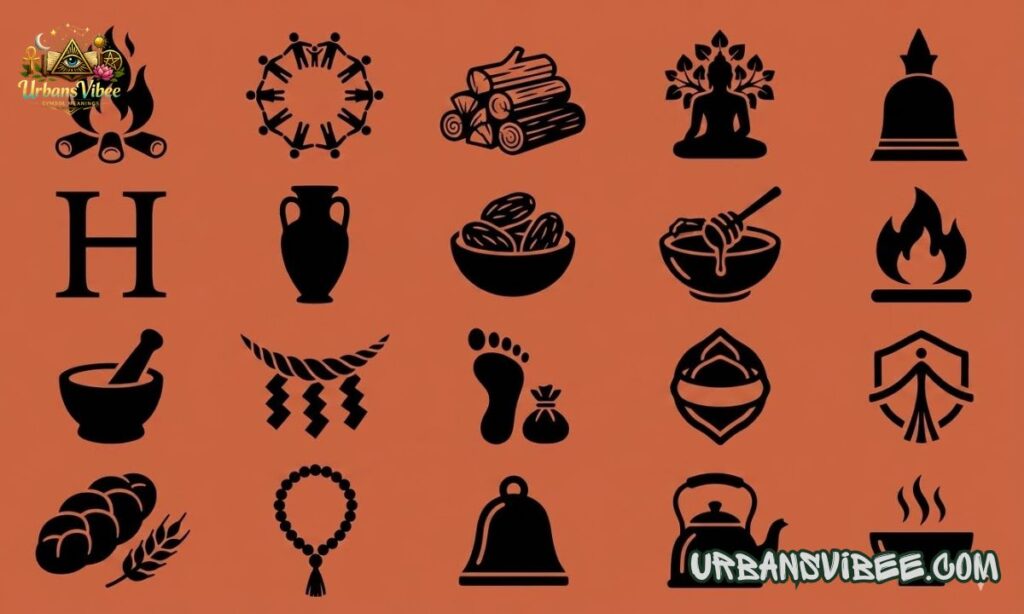
Ancient Greece
In Greece, Hestia was present in every home and every public hall. Her hearth flame was the center of spiritual and civic life. Colonies carried fire from the mother city as a living symbol of her blessing.
Ancient Rome
In Rome, Hestia became Vesta. The Vestal Virgins were tasked with keeping her eternal flame burning in the Temple of Vesta in Rome. If the flame went out, it was considered a terrible omen for the entire city.
Hindu Culture
The sacred fire in Hindu tradition — the Agni — shares deep symbolism with Hestia’s flame. Fire is considered a divine witness and purifier in Vedic rituals. Every Hindu household maintains a sacred fire during ceremonies, reflecting the same belief that Hestia’s flame represented.
Celtic Traditions
Celtic hearth culture closely mirrors Hestia’s symbols. In Celtic homes, the hearth was the spiritual heart of the dwelling, and fire was associated with goddess figures like Brigid — the Celtic goddess of the forge, home, and sacred fire. The parallel to Hestia is striking.
Modern Interpretations
Today, Hestia’s symbols appear in neo-pagan practices, modern witchcraft, and spiritual self-care. Lighting a candle for meditation, creating a sacred home altar, or cooking with intention are all modern echoes of Hestia’s ancient symbolism.
Hestia Symbols in Art, Movies and Pop Culture
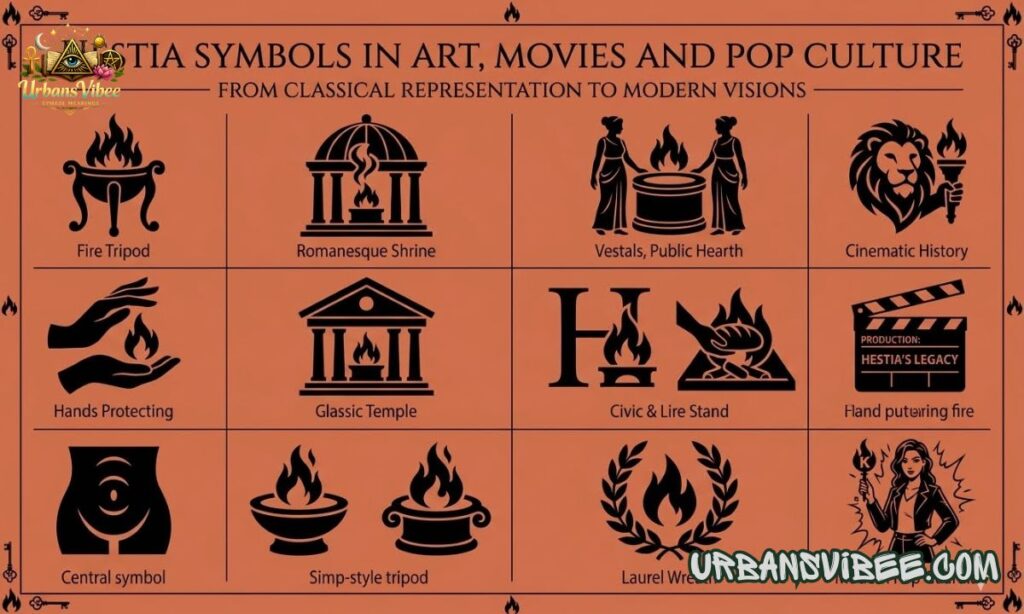
Movies
Hestia does not have a major standalone film, but her influence appears in stories centered on home, family, and the hearth. Films like Brave and Encanto carry the spirit of a home-centered protective goddess figure.
Art
Ancient Greek pottery and sculptures rarely depicted Hestia in action — she was usually shown seated, veiled, and still. This artistic stillness itself became her symbol. In Renaissance art, hearth goddesses drew directly from Hestia’s iconography.
Books
In Rick Riordan’s Percy Jackson series, Hestia appears as a gentle, kind figure who tends the fire at Olympus. She is portrayed as the heart of the gods — steady and overlooked but absolutely essential.
Tattoos
Hestia-inspired tattoos often feature an eternal flame, a circular hearth, or a veiled goddess figure. These designs appeal to people who value home, peace, and inner strength over outward display.
Fashion
Hestia’s aesthetic has influenced slow fashion and cottagecore styles — earthen tones, simple linen fabrics, and home-centered warmth. The visual language of Hestia’s symbols lives in this return to simplicity and domestic beauty.
Spiritual and Dream Meaning of Hestia Symbols
Common Dream Interpretations
Dreaming of a flame or hearth fire often signals a need for warmth, security, or spiritual grounding. Seeing a circle in a dream can point to a search for wholeness. A veiled figure near a fire in a dream may represent a wise inner voice urging you toward peace and stillness.
Positive vs Negative Meaning
Positive Aspects
- Protection and safety in the home
- Spiritual grounding and inner peace
- Family unity and emotional warmth
- Clarity through stillness and simplicity
- Nourishment — emotional and physical
Negative Aspects
- A flame going out can signal disruption, loss, or disconnection from home
- An overemphasis on Hestia energy can lead to isolation or withdrawal from the world
- Neglecting the outer world while tending only to the inner one
Why Humans Are Attracted to Hestia Symbols
Psychological Reasons
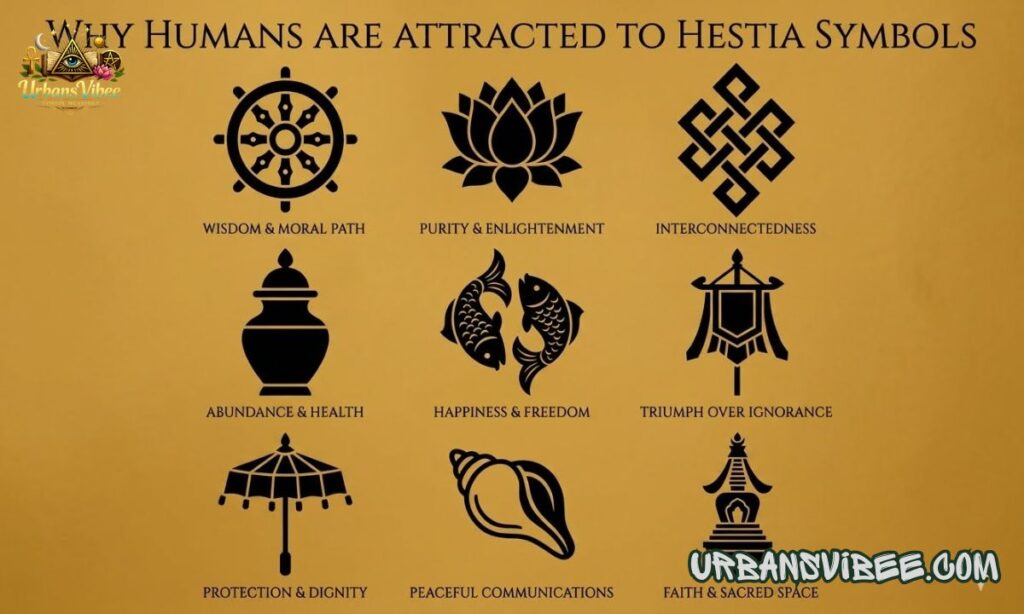
Hestia symbols speak to something deeply wired in the human psyche — the need for safety, belonging, and a stable center. In a fast-moving world, the hearth flame and the circle offer an anchor. They remind us that we do not need constant motion to be powerful.
Emotional Connection
On an emotional level, Hestia’s symbols evoke the feeling of coming home. The smell of food cooking, the warmth of a fire, the quiet of a well-kept home — these experiences touch something universal. People are drawn to these symbols because they represent comfort that feels real.
Conclusion
Hestia may be the quietest goddess in the Greek pantheon, but her symbols are among the most enduring. The flame, the hearth, the circle, the veil, and the kettle are not ancient relics — they are living symbols that shape how we think about home, family, and sacred space to this day.
In a world that often rewards noise and spectacle, Hestia’s symbols remind us that the most powerful forces are often the ones that burn steady, stay home, and never go out.
Frequently Asked Questions
What is the most important symbol of Hestia?
The eternal flame is her most important symbol, representing protection, continuity, and divine presence in every home and temple.
What animals are sacred to Hestia?
The pig and the cow were the most common sacred animals offered to Hestia during household rituals and sacrifices.
What does the hearth represent for Hestia?
The hearth symbolizes the emotional and spiritual center of the home — the place where family, warmth, and sacred life all converge.
Was Hestia a powerful goddess?
Yes, though her power was quiet. She protected homes, maintained divine fire on Olympus, and fostered peace in both families and communities.
What is the circle symbol connected to Hestia?
The circle represents wholeness, eternity, and the unbroken nature of Hestia’s peaceful presence in domestic and civic life.
How is Hestia connected to Vesta in Roman mythology?
Hestia was adopted as Vesta in Roman religion, with the Vestal Virgins tasked with maintaining her sacred eternal flame in Rome.
Why did Hestia give up her Olympian seat?
She is said to have voluntarily stepped aside for Dionysus to keep peace among the gods — an act that reflects her core values of harmony over pride.
What offerings did ancient Greeks give to Hestia?
They offered wine, grain, bread, olive oil, and animal sacrifices — always giving her the first and last portion of every feast.
Do Hestia symbols appear in modern culture?
Yes — Hestia’s symbols appear in neo-pagan practices, tattoos, cottagecore fashion, and stories like the Percy Jackson series.
What does dreaming of a hearth fire mean?
It usually signals a desire for warmth, security, and emotional grounding, often linked to a need to return to home and simplicity.

Stephen Miller is a language enthusiast and symbol researcher at UrbansVibee. He specializes in uncovering the meanings, origins, and cultural significance of symbols, helping readers understand signs, icons, and symbolism from around the world.