
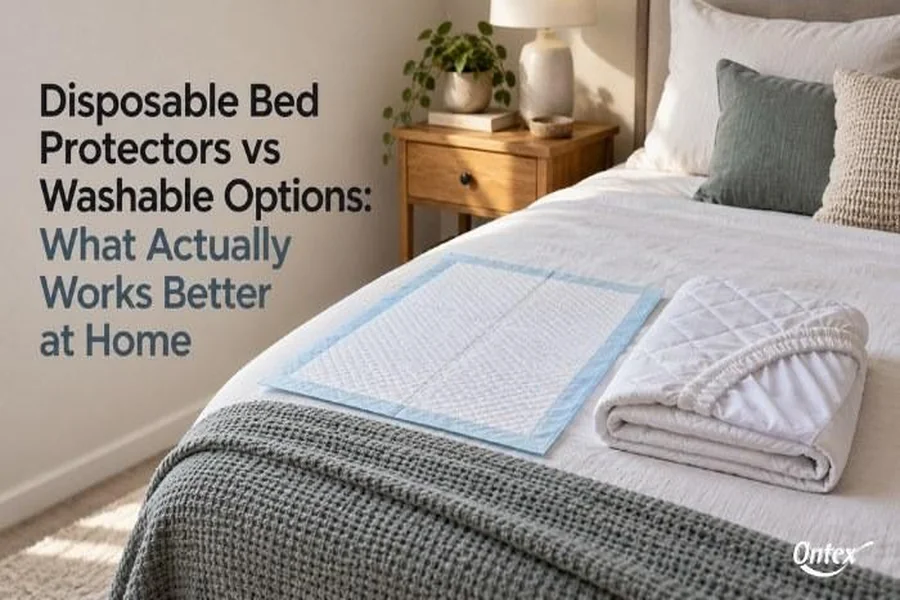
It depends on your situation. If you’re dealing with an occasional accident, a disposable bed pad may make more sense because you can use it, remove it, and throw it away. For nightly incontinence care, a washable mattress protector can be more practical because you can wash and reuse it, potentially saving you money over time.
That’s the kind of decision we help families work through every day at Ontex Healthcare. After years of working with continence care across Australian homes and aged care settings, we know there’s rarely one right answer for everyone.
So in this guide, we’ll compare both options honestly, looking at the cost, cleanup, comfort and situations where each one works best. By the end, you’ll have a clearer idea of which type of bed protection fits your home and routine.
Disposable Bed Protectors vs Washable Mattress Protectors: What’s the Difference?
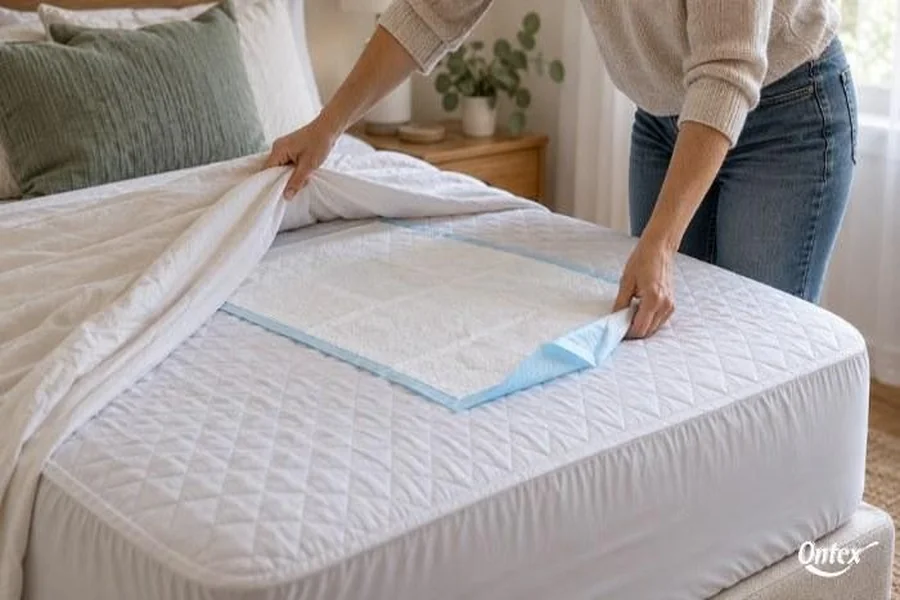
The main difference comes down to how long each option lasts. A disposable bed pad is built for a single use. You fit it to the bed, let it absorb the moisture, then bin it afterwards. A washable mattress protector works on a different cycle. It stays on the bed until it needs changing, at which point you take it off, run it through the laundry, and put it back on.
Comparing the Cost Over Time
Disposable bed pads can cost around $13 to $44 per pack in Australia, depending on the size, absorbency, and number of pads included. Washable mattress protectors usually cost more upfront, with individual protectors commonly starting at around $25 and reaching $100 or more.
Now, if you need bed protection regularly, washable bed pads can work out cheaper over the long term. That’s because you can wash and reuse the same pads many times instead of replacing them after every use.
Buying several disposable pads every week means your spending continues each month, while a washable option spreads its initial cost across repeated uses.
That said, washing is still an ongoing cost, and washable pads eventually need replacing. For occasional accidents, disposable pads can be more economical because you only buy them when you need them.
So, for cost alone, your usual pattern of use is the deciding factor: occasional protection can favour disposables, and regular use can favour washable bed pads.
Which One Makes Cleanup Easier?
Disposable pads generally make wet-bed cleanup faster because you can remove and bin them as soon as they’re soiled. Washable protectors take more work because the used protector needs to go through the laundry before it can be used again.
The difference is more noticeable at night or away from home. With a disposable pad, you can remove the soiled protection quickly without starting a laundry load or finding somewhere to store the used item. That can make a wet bed less disruptive to deal with in the middle of the night.
With washable protectors, you need another clean protector available while the used one is being washed. Away from home, you’ll also need somewhere to keep the soiled protector until you can wash it.
Overall, disposable pads offer a simpler cleanup routine, while washable protectors require more planning around laundry and spare replacements.
Comfort and Practical Fit for Different Situations
The more comfortable choice depends on both how the material feels and how well the protector stays in place during use.
Take a disposable option such as Ontex Healthcare’s Lille Classic Extra Bed Pad. Its soft surface is designed to sit against the skin while the absorbent layers handle moisture underneath. A basic disposable pad with less cushioning can feel different, particularly if you use it for several hours overnight.
That doesn’t mean a more expensive disposable product will always feel better than a washable protector. A washable option can feel softer and more like a regular sheet, especially when you choose a fabric you find comfortable and use a well-fitting size.
Fit also affects comfort. A protector that shifts, bunches, or slides during the night can become uncomfortable regardless of how soft the material feels.
The setting can influence the practical choice too. Disposable pads are easier to pack and replace during travel, short stays, or aged care visits. At home, washable protectors can work well when you have access to laundry and a spare available.
When It Makes Sense to Use Both
You don’t have to choose between disposable and washable protectors for every situation. Using both can give you the convenience of disposables when you need a quick change, while keeping washable protectors in rotation at home.
For example, you might use washable protectors for everyday use at home, where you have easy access to a washing machine. For travel, overnight stays or visits elsewhere, disposable pads can be easier to pack, use and dispose of afterwards.
The same combination can help in care settings such as hospice or community care, where routines vary. You can use washable protectors when regular laundry is practical. Then keep disposable pads available for outings, unexpected accidents, or situations where washing the used protector isn’t convenient.
How to Choose the Right Option for Your Home

The right choice starts with what your household needs on a typical night. A few practical factors can help guide that decision:
- How Often Leaks Happen: Occasional accidents can make disposable pads more practical since you only use them when an accident occurs. If leaks happen every night or more often, washable protectors can reduce the ongoing cost because you can wash and reuse them.
- Laundry Access and Routine: Washable protectors need regular washing to stay effective, so they work best when a washing machine is easy to access. If laundry isn’t practical, disposable pads will remove the need to wash and dry the protector.
- Who’s Using the Protector: Children, elderly users, or anyone with sensitive skin may need extra comfort or specific sizes. That’s why you should check the product details to make sure the protector suits the user’s needs.
The Australian Government’s continence products guide also points out that bed pads work best as a back-up to pads or pants, rather than a replacement for them. This is particularly relevant if you’re managing moderate to heavy leaks. That makes your overall routine just as important as the upfront price when choosing between disposable and washable protectors.
Match the Protection to the Situation
Now that you’ve compared cost, cleanup, and comfort, you have the information to choose between disposable and washable protection. And if your routine changes, you will be able to use the same factors to reassess which option works best.
Need more information before you decide? Visit Ontex Healthcare to explore our disposable and washable options.

Stephen Miller is a language enthusiast and symbol researcher at UrbansVibee. He specializes in uncovering the meanings, origins, and cultural significance of symbols, helping readers understand signs, icons, and symbolism from around the world.