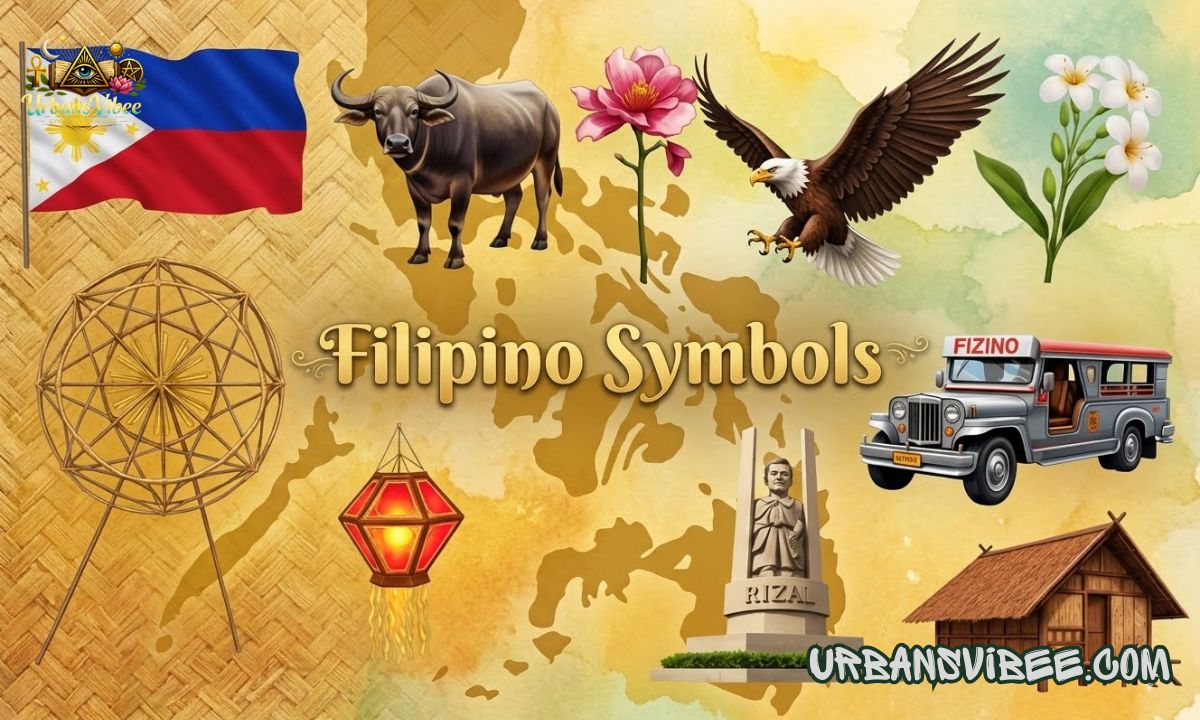
The Philippines is an archipelago of more than 7,000 islands, each carrying layers of story, spirit, and symbol. Long before the Spanish arrived in 1521, early Filipinos had already built a rich world of visual meaning — encoded in tattoos, textiles, carvings, flags, and rituals.
These Filipino symbols were never decorations. They were a living language, communicating identity, protection, ancestry, and faith across generations. Today, that language is being reclaimed, redesigned, and worn with pride.
This guide unpacks 55+ of the most powerful Filipino symbols, their hidden meanings, and why they still matter deeply in the modern world.
What Are Filipino Symbols?
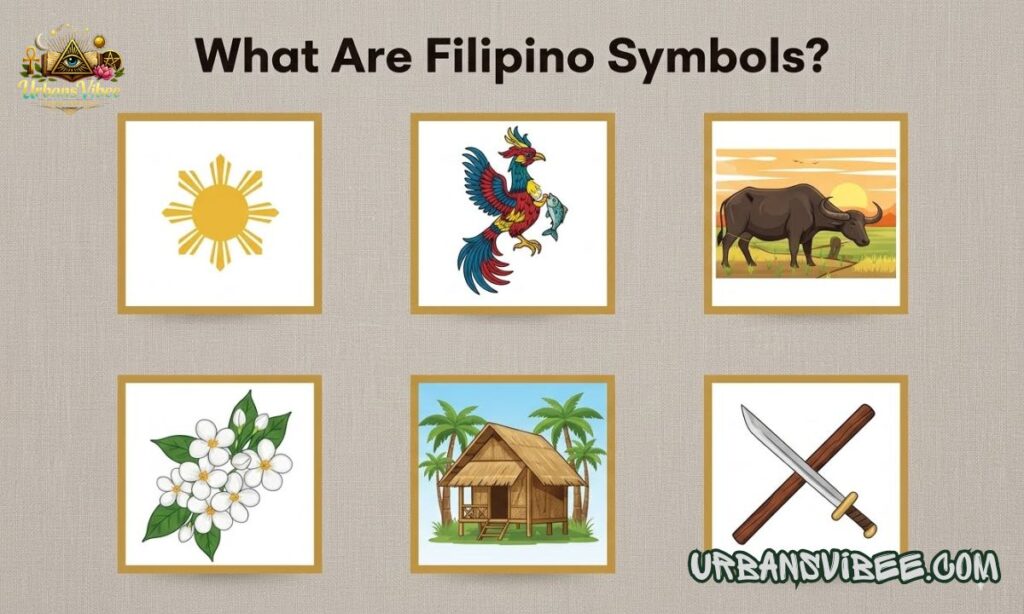
Filipino symbols are visual representations — objects, animals, scripts, patterns, and colors — that carry shared cultural, spiritual, or historical meaning among the Filipino people. They emerge from three overlapping worlds: pre-colonial indigenous traditions, centuries of Spanish colonial influence, and the living, evolving modern Filipino identity.
As researchers note, Filipino culture is an amalgamation of eastern and western influences, where pre-colonial notions have blended with Spanish, Chinese, and American contact to create something uniquely layered. Filipino symbols reflect that layering — they are rarely simple. They carry faith, resistance, resilience, and belonging all at once.
Filipino Cultural Symbols And Their Meanings
| Symbol | Category | Core Meaning |
| Philippine Flag | National | Freedom, bravery, unity |
| Sarimanok | Mythological | Good fortune, prestige, protection |
| Baybayin Script | Cultural/Historical | Identity, knowledge, pre-colonial pride |
| Philippine Eagle | National/Natural | Strength, freedom, sovereignty |
| Sampaguita | National | Purity, humility, devotion |
| Narra Tree | National | Strength, resilience, endurance |
| Anito Figures | Spiritual | Ancestral connection, protection |
| Okir Patterns | Indigenous Art | Life force, continuity, harmony |
| Carabao | Cultural | Hard work, patience, agrarian roots |
| Bahay-Kubo | Cultural | Bayanihan, community spirit |
Filipino Symbols And Meanings
Every Filipino symbol carries at least two meanings — what it shows and what it holds beneath the surface. The sun on the flag is not just a sun. The eagle is not just a bird. The centipede tattoo on an Ifugao man’s body was believed to help him cross into the afterlife. Understanding Filipino symbols and meanings means entering that deeper layer where culture and soul meet.
Filipino Flag
The Philippine flag is the country’s most powerful national symbol. Adopted on June 12, 1898, it features three golden stars, a golden sun with eight rays, a white triangle, and blue and red horizontal stripes.
- Blue stripe — Peace, truth, and justice
- Red stripe — Patriotism and valor in battle
- White triangle — Equality and fraternity
- Eight-rayed sun — The eight provinces that first rose against Spanish colonial rule
- Three stars — Luzon, Visayas, and Mindanao, the country’s three main island groups
When the flag is displayed with the red stripe on top, it signals a state of war. That single reversal transforms the same symbol into something urgent and different — proof that Filipino symbolism is deeply contextual.
Filipino Symbols Tattoos
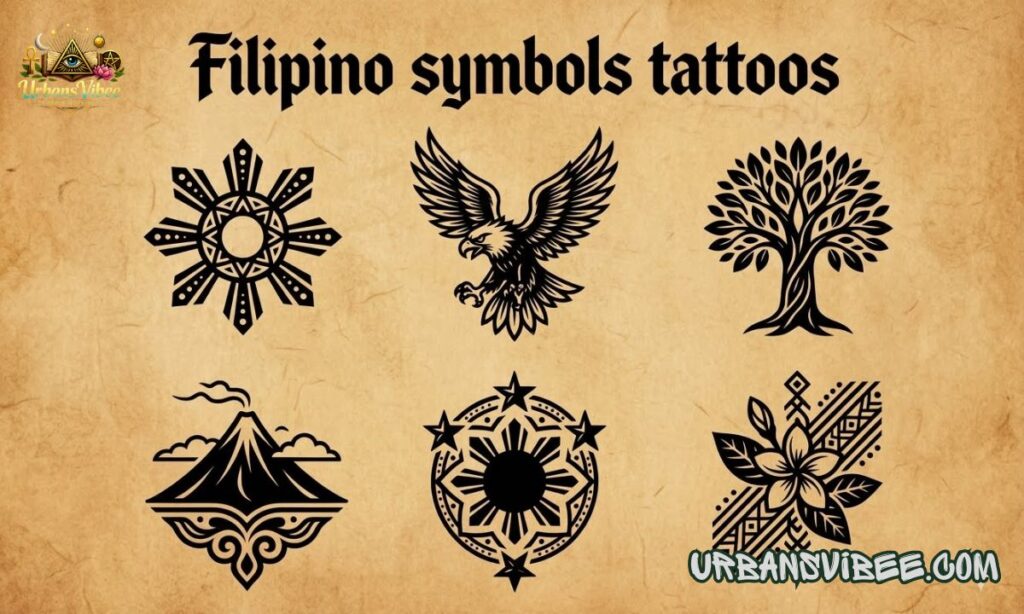
Tattooing in the Philippines is ancient, sacred, and earned. Pre-colonial Filipinos practiced batok (or batek) — hand-tapped tattooing using thorns, bamboo sticks, and soot. The Spanish who arrived in the Visayas in 1521 called the tattooed natives pintados, meaning “painted people,” because most of their bodies were covered in intricate designs.
Warriors earned their tattoo symbols through acts of courage in battle. Each mark was a record — of enemies defeated, villages protected, and spirits honored. Spiritual symbols were believed to provide protection against evil or ensure safe passage to the afterlife.
Common Filipino symbols tattoo motifs include:
- Sun and rays — Life, courage, and freedom
- Waves — Fluidity of life and connection to the sea
- Centipede — Protection and passage to the afterlife
- Geometric patterns — Status, tribal identity, and spiritual power
- Philippine Eagle — Authority, power, and national pride
- Sarimanok — Courage, guidance, and good fortune
Today, Apo Whang-Od — the legendary mambabatok (traditional tattooist) from Kalinga — represents the living heartbeat of this tradition. Now over 100 years old, she has been recognized internationally, including as a Vogue Philippines cover model, as a keeper of a 1,000-year-old tattooing technique.
Filipino Symbols Letters
Baybayin is the ancient writing script of the Philippines, used widely in pre-colonial times before the Spanish introduced the Latin alphabet. Each Baybayin character represents a syllable rather than a single letter, making it an abugida writing system. It flows beautifully — characters are rounded and organic, designed to be written on perishable materials like bamboo and leaves.
Today, Baybayin appears in government seals, tattoos, fashion, and activism. The National Museum uses the Baybayin symbol for Pa (first syllable of pamana, meaning heritage) as part of its logo. Baybayin has become a rallying symbol for those reclaiming pre-colonial Filipino identity and pushing back against historical erasure.
Philippines Symbols And Meanings
The Philippines encodes its national identity through both official and unofficial symbols. Together, they tell the story of a people defined by resilience, nature, spirituality, and community.
National Symbols Of The Philippines
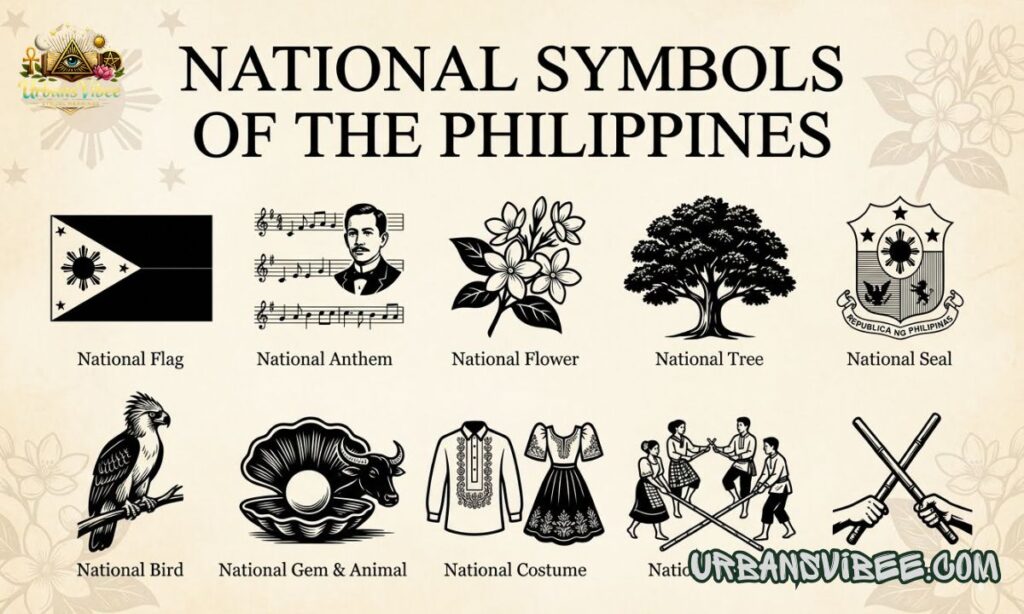
What Are The 10 National Symbols Of The Philippines
The Philippines has twelve official national symbols recognized through law under Republic Act 8491 and the Constitution. The most widely recognized include:
- National Flag — Symbol of sovereignty and independence
- National Anthem (Lupang Hinirang) — Song of patriotism and pride
- National Seal — Official emblem of the Philippine government
- Sampaguita (National Flower) — Purity, simplicity, and humility
- Narra (National Tree) — Strength and resilience; one of the hardest woods
- Philippine Eagle (National Bird) — Power and freedom
- Philippine Pearl (National Gem) — Beauty born from patience
- Arnis (National Martial Art) — Filipino fighting spirit and discipline
- Filipino Sign Language (National Sign Language) — Inclusion and accessibility
- Bangus/Milkfish (National Fish) — Abundance and the sea-based culture
- Carabao (National Animal, widely recognized) — Hard work, patience, agricultural identity
- Mango (National Fruit, widely recognized) — Richness, tropical abundance
Philippine National Symbols With Pictures And Description
The Philippine Eagle, known locally as Haring Ibon (King of Birds), is one of the largest eagles in the world. Critically endangered, it lives only in the Philippines, making it both a symbol of national pride and a call to environmental responsibility.
The Sampaguita — a small, intensely fragrant white flower — is offered at altars, worn in garlands, and given as a gesture of devotion and welcome. Its simplicity is its power.
The Narra tree is described as one of the strongest and most durable hardwoods in the Philippines, which is exactly why it was chosen to represent the Filipino people’s endurance through centuries of hardship.
National Tree Of The Philippines
The Narra (Pterocarpus indicus) is the national tree of the Philippines. It produces a beautiful golden-yellow flower and is prized for both its strong timber and its medicinal properties. Symbolically, the Narra represents the unbreakable strength and resilience of the Filipino people — a tree that bends in storms but does not break.
Ancient And Traditional Filipino Symbols
Ancient Filipino Symbols
Long before Spanish colonization, ancient Filipinos used symbols tied to animism and deep nature worship. Mountains, rivers, seas, animals, and celestial bodies all carried sacred meaning. These symbols appeared in burial practices, social rituals, agricultural ceremonies, and body art.
Key ancient Filipino symbols include:
- The Sun — Life, divine energy, the source of all growth
- The Moon — Feminine energy, fertility, and the rhythm of nature
- The Star — Guidance, aspiration, and connection to ancestors
- The Serpent/Snake — Duality of protection and danger
- The Crocodile — Power, authority, and respect in riverine communities
- The Mountain — Closeness to the divine, spiritual ascent
Filipino Symbolism
Filipino symbolism is not a single tradition. It is a layered conversation between indigenous animism, Austronesian mythology, Chinese trade influence, Spanish Catholic imagery, and American colonial modernity. Every symbol carries the fingerprints of that long, complex history.
Traditional Filipino Symbols
Traditional Filipino symbols were embedded in everyday objects — woven textiles, carved tools, pottery, jewelry, and the architecture of homes. The bahay-kubo (nipa hut) itself is a symbol: its lightweight, communal construction embodies bayanihan — the Filipino value of collective effort and community support.
Filipino Good Luck Symbols
Filipino good luck symbols include:
- Sarimanok — The legendary bird that brings fortune to whoever catches it
- Sampaguita garlands — Used to bless guests and new beginnings
- Anahaw palm — Peace, hospitality, and a welcoming spirit
- Coins and red envelopes (influenced by Chinese trade) — Prosperity and wealth
- The carabao figure — Steady progress and agricultural abundance
Filipino Ancient Symbols For Strength
Ancient symbols of strength in Filipino culture were primarily earned, not given. A warrior’s tattoo was proof of strength demonstrated in real life. The Whatok — a traditional tattooing tradition of the Cordillera people — was accompanied by chants called ullalim, sung during the tattooing session, connecting the mark to living oral tradition.
Strength symbols also appeared in:
- The Philippine Eagle — Apex predator, representing fearless authority
- The Carabao — Quiet, enormous strength in service of community
- Geometric warrior tattoo patterns — Each line a record of battles fought
Filipino Indigenous Symbols
Indigenous Filipino symbols vary by region and tribe, reflecting the Philippines’ remarkable cultural diversity:
- Kalinga (Cordillera) — Geometric tattoo patterns for warriors and healers
- T’boli (Mindanao) — T’nalak woven textile in red, black, and white, used for barter, weddings, and healing rituals
- Maranao (Mindanao) — Sarimanok and Okir patterns
- Ifugao (Cordillera) — Centipede motifs, rice terraces as living cultural symbols
- Visayan — Pintados tattoo tradition, covering the body in intricate designs
Filipino Protection Symbols
Protection was one of the primary purposes of ancient Filipino symbolism. Specific symbols believed to offer spiritual protection include:
- Anito figures — Small carved figures believed to house ancestral spirits that protected the household
- Centipede tattoos — Worn by Ifugao men to protect against evil and aid in passing to the afterlife
- Geometric warrior tattoos — Believed to carry magical, protective power
- The Hamsa-inspired hand symbols (introduced through trade) — Warding off ill fortune
- Sacred scripts (Oraciones) — Esoteric writings believed to offer spiritual armor
Filipino Symbols Of Identity, Culture And Strength
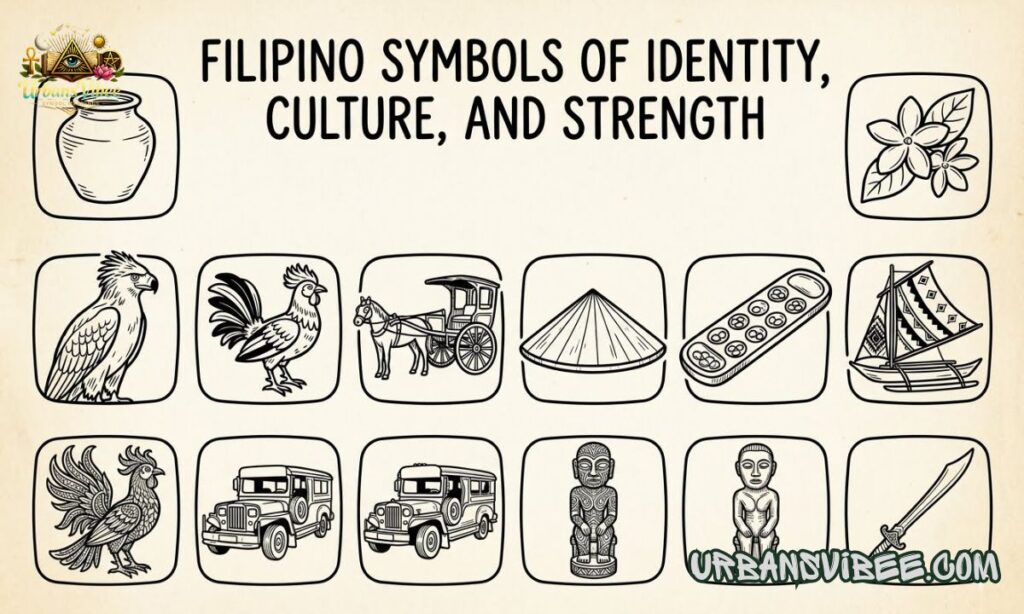
Family Filipino Symbols And Meanings
The family is the central unit of Filipino identity, and several symbols directly represent that bond:
- The bahay-kubo — Community, togetherness, and building shelter for each other
- Sampaguita garlands — Given between family members as tokens of love and devotion
- The carabao — The family working together through hardship, pulling the same load
- Rice — The shared table, sustenance, and the cycles of family life
Filipino Symbols For Strength
The strongest Filipino symbols of personal and collective strength are:
- The Philippine Eagle — Rare, powerful, and found nowhere else on earth
- The Narra tree — Resistant to storms and insects, enduring through centuries
- The Warrior tattoo — Strength earned through action, not inheritance
- The Sarimanok — Resilience, good fortune pursued even in hardship
- The Baybayin script — The strength to remember and reclaim one’s own voice
Symbols That Represent Filipino Culture
Filipino culture is represented by symbols that balance three forces: nature, community, and spirit. The Philippine flag brings them together — the natural sun and stars, the communal triangle of equality, and the colors of collective sacrifice and peace.
Indigenous Filipino Symbols
Indigenous Filipino symbols are experiencing a powerful cultural revival. Young Filipinos are reclaiming Baybayin in tattoos, fashion, and street art. Artists are incorporating Okir and T’nalak patterns into contemporary design. And batok tattooing has found a new generation of practitioners inspired by Apo Whang-Od’s legacy.
More Ancient And Cultural Filipino Symbols
Ancient Filipino Symbols And Meanings
| Symbol | Origin | Meaning |
| Whatok tattoo | Kalinga/Cordillera | Strength, valor, spiritual protection |
| T’nalak cloth | T’boli, Mindanao | Ritual healing, bride price, social status |
| Anito figures | Nationwide (pre-colonial) | Ancestral spirits, household protection |
| Okir carvings | Maranao, Mindanao | Life force, endless continuity |
| Centipede motif | Ifugao | Afterlife passage, protection |
| Sun symbol | Nationwide | Divine energy, freedom, life |
| Baybayin script | Nationwide (pre-colonial) | Identity, knowledge, cultural pride |
Warrior Filipino Symbols
Filipino warriors used symbols as both armor and identity. Tattoo coverage directly corresponded to status — the more elaborate and extensive the tattoo, the higher the warrior’s rank. In the Kalinga tradition, reaching a tattoo on the cheeks signified attaining the title of mai’ngor — a warrior of the highest level.
Ilocano Ancient Filipino Symbols And Meanings
Ilocano cultural symbols are deeply tied to agricultural life, craftsmanship, and community values. The abel (traditional Ilocano woven fabric) is a symbol of patience, skill, and cultural pride. The geometric patterns within abel textiles encode identity and family lineage in their colors and designs.
Deep Symbolic Meaning of Filipino Symbols
Spiritual Level
In ancient Filipino culture, symbols carried direct spiritual power. Anito figures were believed to literally house the spirits of ancestors or nature beings. Tattoos were thought to survive death, helping the wearer gain passage to the afterlife. Symbols were not just representations of the spiritual — they were believed to be spiritual, carrying active protective or connective energy.
Psychological Level
On a psychological level, Filipino symbols function as anchors of identity. For Filipinos in the diaspora — living far from the archipelago — symbols like the flag, Baybayin script, and Sarimanok serve as tangible connections to home, ancestry, and belonging. They reduce the psychological weight of cultural displacement by keeping the thread of identity intact.
Cultural Level
Culturally, Filipino symbols define social roles, mark life transitions, and encode community values. The T’nalak cloth determined bride prices. The warrior tattoo marked readiness for adult responsibility. The Sampaguita garland welcomed guests into the circle of community. These symbols are not passive — they actively structure social life.
Types and Variations of Filipino Symbols
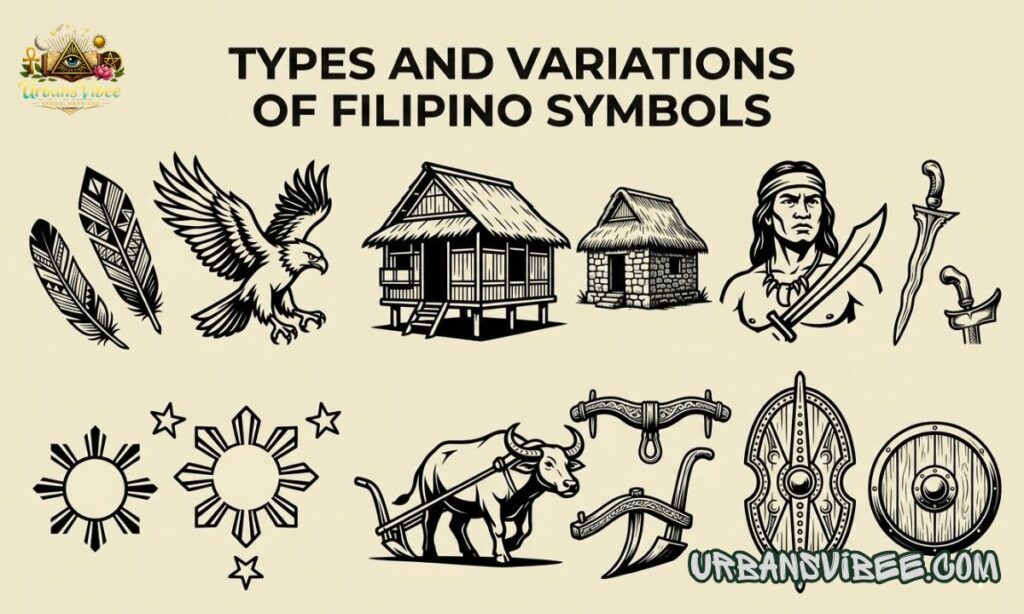
Sarimanok
Visual: A colorful mythical bird, often holding a fish, with elaborate tail feathers Meaning: Good fortune, prestige, protection, and divine blessing Appears In: Maranao art, wood carvings, textiles, jewelry, and sultan’s ceremonial umbrellas
The Sarimanok comes from the Maranao people of Mindanao. The word combines sari (various/assorted) and manok (bird/chicken), meaning a bird of many colors. Whoever catches this mythical bird is said to receive good luck — making it the Philippines’ most beloved good fortune symbol.
Sun and Stars of the Philippine Flag
Visual: Eight-rayed golden sun and three golden stars on a white triangle Meaning: Freedom, sacrifice, unity across the three island groups, and the revolutionary spirit Appears In: The national flag, government seals, patriotic art, and national celebrations
Anito Figures
Visual: Small carved wooden or ivory humanoid figures Meaning: Housing for ancestral and nature spirits; household protection and guidance Appears In: Pre-colonial homes, burial sites, and museum collections
Okir Patterns
Visual: Flowing, plant-inspired geometric carvings with curved and spiraling lines Meaning: Life force, endless continuity, and the interconnection of all beings Appears In: Mindanao architecture, boats, textiles, and decorative arts
Baybayin Script
Visual: Rounded, flowing syllabic characters written right-to-left in traditional use Meaning: Pre-colonial Filipino identity, knowledge, cultural revival, and pride Appears In: Tattoos, government logos, fashion, street art, and educational materials
Filipino Symbols Across Cultures
Filipino symbolism exists at the intersection of multiple cultural streams. Pre-colonial Austronesian traditions brought animism and nature worship. Chinese trade introduced prosperity symbols, dragon imagery, and lucky color associations.
Spanish colonization layered Catholic crosses, saints, and religious iconography over indigenous symbols — sometimes replacing them, sometimes fusing with them. American colonial influence introduced modern institutional symbols like official seals, military badges, and formal flag protocols.
Today, the result is a symbol system that is uniquely Filipino — neither purely indigenous nor purely colonial, but a living synthesis that continues to evolve.
Filipino Symbols in Art, Movies and Pop Culture
Filipino symbols have broken into mainstream global culture in striking ways. Apo Whang-Od’s appearance on the cover of Vogue Philippines brought batok tattooing to international fashion audiences. Filipino-American artists in Los Angeles formed groups like Tatak ng Apat na Alon (Mark of the Four Waves) to preserve tribal designs in contemporary tattoo art.
In film and television, the Philippine flag and the Sarimanok appear as recurring visual shorthand for Filipino identity and pride. In street art and muralism, Baybayin script has become a tool of cultural activism — reclaiming walls and public spaces with pre-colonial letters.
Filipino designers are incorporating Okir, T’nalak patterns, and Baybayin into fashion collections shown at international runways, making indigenous Filipino symbolism visible on a global stage.
Spiritual and Dream Meaning of Filipino Symbols
When Filipino symbols appear in dreams, they carry personal and ancestral messages. Dreaming of the Sarimanok is widely interpreted as an approaching period of good fortune or an ancestor’s blessing. Dreaming of the sun — one of the most universal Filipino spiritual symbols — suggests renewal, clarity, and personal power awakening.
Anito figures in dreams may be interpreted as ancestral communication: a message from those who came before, asking to be remembered. Baybayin characters appearing in a dream can signal the need to reconnect with one’s roots, heritage, or cultural identity.
Spiritually, these symbols serve as bridges between the visible and invisible worlds — a role they have held in Filipino culture for thousands of years.
Positive vs Negative Meaning
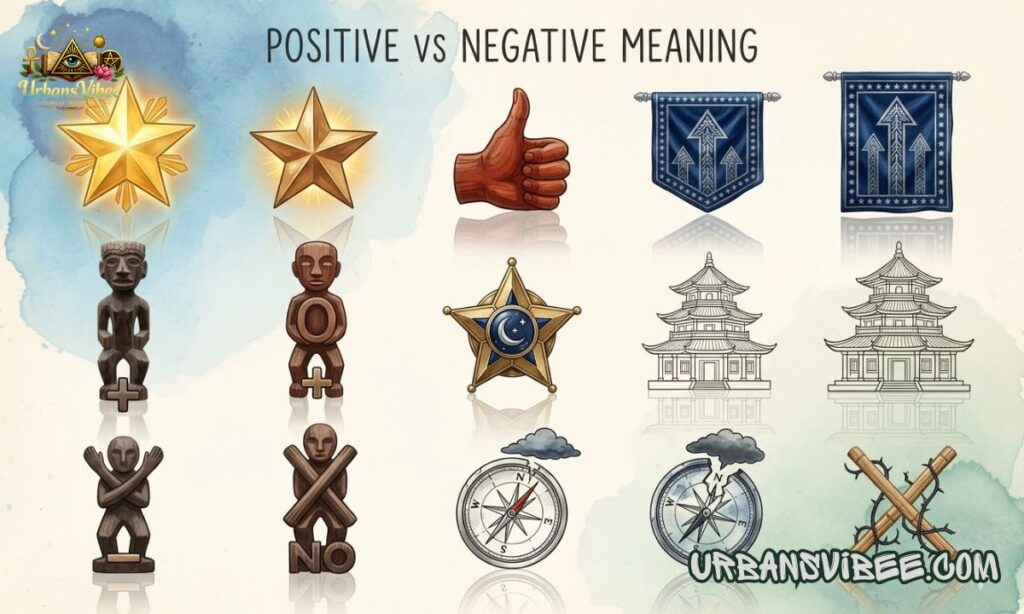
Positive Meaning:
- Sarimanok → Fortune, divine blessing, and the hope of abundance
- Philippine Eagle → Sovereignty, freedom, and proud national identity
- Baybayin → Cultural revival, self-knowledge, and ancestral connection
- Sampaguita → Purity, welcoming love, and spiritual devotion
- Warrior tattoo → Earned strength, honor, and protection for the community
Negative Meaning:
- Reversed flag (red on top) → A declaration of war and national emergency
- Serpent symbols (misused) → Deception, hidden danger, and betrayal
- Anito figures (neglected) → Ancestral displeasure and spiritual imbalance
- Colonial-era misuse of symbols → Cultural erasure and suppression of identity
- Appropriation without understanding → Hollowing out sacred meaning for aesthetics alone
Why Humans Are Attracted to Filipino Symbols?
The pull toward Filipino symbols is not accidental — it is deeply human. These symbols speak to universal needs: belonging, identity, protection, and connection across time. For Filipinos in the diaspora, scattered across more than 100 countries, symbols like the flag, Baybayin, and the Sarimanok function as anchors to a homeland that may be thousands of miles away.
For non-Filipinos, these symbols carry the magnetic attraction of depth — they feel earned, ancient, and meaningful in a world saturated with hollow imagery. A Kalinga warrior tattoo is not mass-produced. It was hand-tapped with a pomelo thorn by a healer who chanted prayers into the skin. That authenticity resonates across cultural boundaries.
Conclusion
Filipino symbols are not relics of the past. They are living, breathing tools of identity, resilience, and cultural pride that continue to evolve with every generation. From the eight-rayed sun on the flag to the curved lines of Baybayin script, from the mystical Sarimanok to the earned warrior tattoo — each symbol carries a story of people who refused to be erased.
Understanding these symbols means understanding the Filipino people: their long history of resistance, their deep love of community, their reverence for ancestors, and their unstoppable hope for the future. When you truly see these symbols, you do not just learn history. You feel belonging.
Frequently Asked Questions
What are Filipino symbols?
Filipino symbols are visual representations — including animals, scripts, patterns, and objects — that carry cultural, spiritual, or historical meaning for the Filipino people.
What is the most important Filipino cultural symbol?
The Philippine flag is the most universally recognized Filipino symbol, representing independence, unity, sacrifice, and national identity.
What does Baybayin mean in Filipino culture?
Baybayin is the pre-colonial script of the Philippines, now a powerful symbol of cultural revival and pride in indigenous identity.
What are ancient Filipino symbols for strength?
Ancient Filipino symbols for strength include the warrior tattoo (batok), the Philippine Eagle, the Narra tree, and the Whatok tattooing tradition of the Cordillera people.
What is the Sarimanok symbol?
The Sarimanok is a legendary Maranao bird symbolizing good fortune, prestige, and divine protection, often depicted holding a fish with colorful wings and tail feathers.
What do Filipino tattoo symbols mean?
Filipino tattoo symbols (batok) represent strength, courage, spiritual protection, ancestral connection, and social status — each design was historically earned through lived experience.
What are Filipino symbols for family?
Filipino symbols for family include the bahay-kubo (communal shelter), sampaguita garlands (love and devotion), and the carabao (collective effort and enduring support).
What is the national bird of the Philippines?
The Philippine Eagle (Pithecophaga jefferyi), known as Haring Ibon (King of Birds), is the national bird, symbolizing strength, freedom, and sovereignty.

Stephen Miller is a language enthusiast and symbol researcher at UrbansVibee. He specializes in uncovering the meanings, origins, and cultural significance of symbols, helping readers understand signs, icons, and symbolism from around the world.