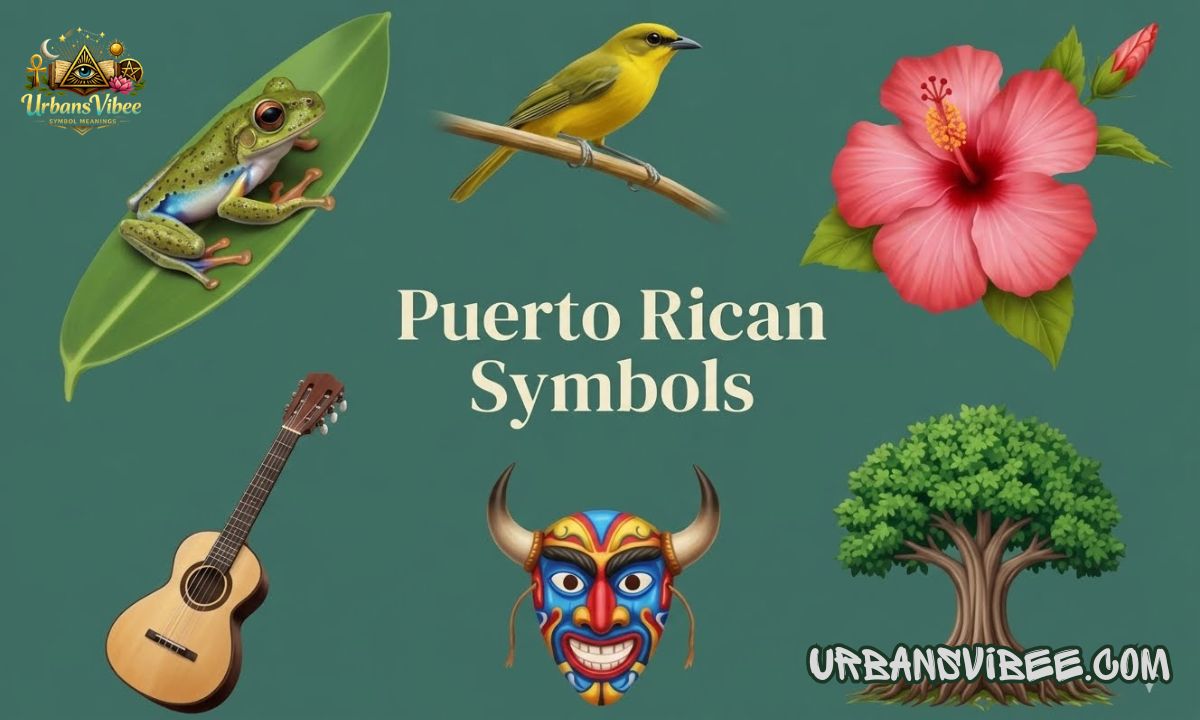
Puerto Rico is more than a Caribbean island — it’s a living, breathing culture shaped by three worlds: the indigenous Taíno, Spanish colonizers, and West African heritage. Nowhere is this richer story told more clearly than through its symbols.
From the tiny coquí frog echoing through rainforests to ancient Taíno petroglyphs carved into cave walls, Puerto Rican symbols carry centuries of identity, spirituality, and resilience.
Whether you’re exploring Puerto Rican symbols for tattoo inspiration, cultural research, or simply connecting with your Boricua roots, this guide covers all 45+ symbols, their deep meanings, and why they still matter today.
What Are Puerto Rican Symbols?
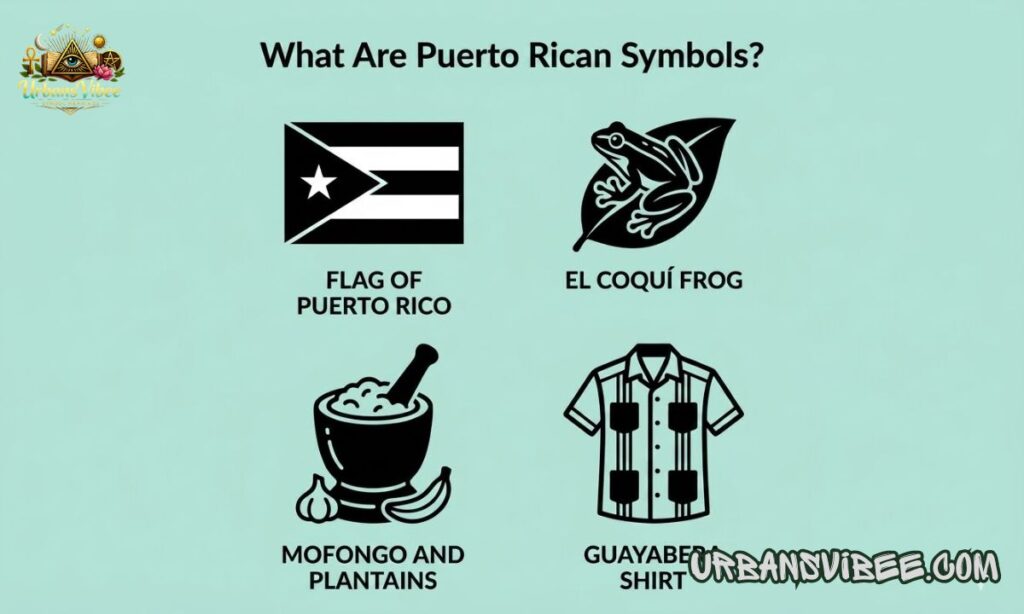
Puerto Rican symbols are visual, cultural, and spiritual icons that represent the island’s heritage, values, and identity. They span three major cultural traditions:
- Taíno indigenous symbols — petroglyphs, zemis, and sacred animals
- National symbols — the flag, coat of arms, and anthem
- Natural and folk symbols — the coquí, hibiscus flower, and sea turtle
These symbols appear in art, architecture, jewelry, clothing, tattoos, and everyday life across the island and in diaspora communities worldwide.
Puerto Rican Symbols And Their Cultural Meanings
Puerto Rican culture is layered — and its symbols reflect exactly that. The Taíno people left behind petroglyphs across caves and ceremonial plazas, each representing gods, natural forces, or stories of daily life. Spanish colonial rule added Catholic imagery and heraldry. African traditions brought spiritual protection symbols and visual storytelling into the mix.
Together, they created one of the most distinctive symbolic vocabularies in the Americas. Understanding these symbols isn’t just about art history — it’s about understanding the soul of a people.
Puerto Rican Symbols And Meanings
Here is a comprehensive table of the most important Puerto Rican symbols and their core meanings:
| Symbol | Origin | Core Meaning |
| Coquí Frog | Taíno / Natural | Pride, home, resilience |
| Taíno Sun (Sol de Jayuya) | Taíno | Life, divine energy, power |
| Puerto Rican Flag | Colonial / Modern | Freedom, blood, liberty |
| Flor de Maga (Hibiscus) | Natural | National beauty, femininity |
| Taíno Spiral | Taíno | Cosmic energy, eternal life |
| Atabey (Frog Goddess) | Taíno | Fertility, water, motherhood |
| Conch Shell (Cobo) | Taíno | Spiritual calling, communication |
| Ceiba Tree | Indigenous | Sacred connection to the earth |
| Leatherback Sea Turtle | Natural | Creation, stability, ancestors |
| Coat of Arms | Colonial | History, governance, identity |
| Taíno Toa Symbol | Taíno | Motherhood, longing, transformation |
| Eternal Lovers | Taíno | Equality, love, tribal unity |
| Zemi Figures | Taíno | Ancestral spirits, divine protection |
| Birds (Herons/Cranes) | Taíno | Masculinity, tribal identity |
| Twin Symbol | Taíno | Duality, seasons, balance |
Puerto Rican Symbols Tattoos
Tattoos are one of the most powerful ways Puerto Ricans carry their culture — whether living on the island or in the diaspora. Puerto Rican tattoo culture has exploded across cities like New York, Chicago, and Orlando, where Boricua communities use ink as a statement of identity.
Most popular Puerto Rican symbol tattoos include:
- The coquí frog — representing “Soy de aquí como el coquí” (I’m from here like the coquí)
- The Sol de Jayuya (Taíno Sun) — the most tattooed Puerto Rican symbol in the U.S. diaspora
- The Puerto Rican flag — a symbol of pride, history, and reclaimed identity
- Atabey — the frog goddess, popular among women honoring ancestry
- Taíno spirals — representing cosmic energy and personal transformation
- The sea turtle — worn to symbolize creation, wisdom, and ancestral connection
A Puerto Rican raised in the Bronx might get a coquí tattoo as a declaration that home lives in the heart, no matter the distance. A young woman might choose the Maga hibiscus to honor her grandmother’s garden back on the island. These tattoos carry real cultural weight — approach them with knowledge and respect.
Taino Symbols And Meanings
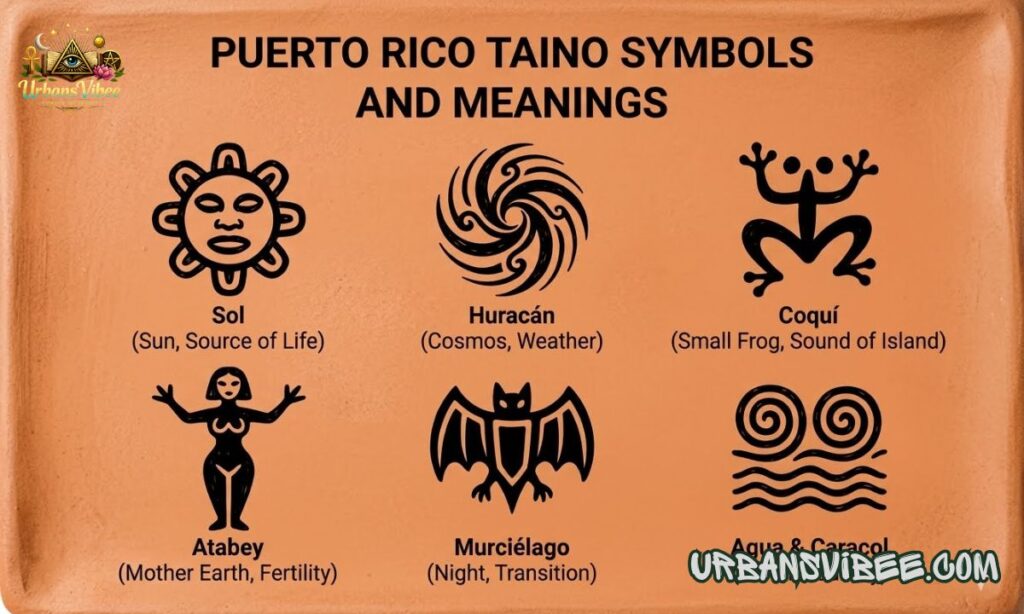
The Taíno Indians were the original inhabitants of what is now Puerto Rico, Cuba, Hispaniola, Jamaica, and the Bahamas. Their symbolic language was encoded in petroglyphs (carved rock art) and pictographs (painted images) found across caves and ceremonial plazas.
Key Taíno symbols and their meanings:
- Atabey — The mother goddess of water, fertility, and fresh water; depicted as a woman with frog legs, invoked during childbirth
- Yocahu — The supreme male deity of agriculture, the sun, and the sea
- Guey (Sol Taíno) — A circular face with geometric radiating rays, representing divine life force
- Zemi — Sacred three-pointed figures housing ancestral spirits and divine powers
- The Spiral — Representing cosmic energy, continuity, and sweet water
- Toa Symbol — Meaning “mother” in Taíno; rooted in a legend of children crying for their abducted mothers
- Eternal Lovers — Two birds connected beak-to-beak, representing tribal equality and love
The earliest written record of Taíno symbols comes from Fray Ramón Pané in the 15th century. Archaeological breakthroughs in 2022 allowed dating of pre-Hispanic Puerto Rican rock art for the first time, found in caves on Mona Island — a sacred Taíno spiritual hub.
Puerto Rican Symbols Copy And Paste
People frequently search for Puerto Rican symbols to use in digital spaces — social media, messages, and design projects. Here are the most commonly used:
🇵🇷 — Puerto Rican Flag
☀️ — Taíno Sun symbol
🐸 — Coquí Frog
🌺 — Hibiscus / Flor de Maga
🐢 — Sea Turtle
🌀 — Taíno Spiral
These simple icons help the diaspora express cultural pride online, making Puerto Rican identity visible in every conversation.
Puerto Rico Taino Symbols
Taíno symbols are foundational to Puerto Rican identity. Carved between approximately 5000 BC and 1700 AD on cave walls and rocks across the island, they represent what remains of an almost entirely lost civilization. After Spanish colonization, disease, war, and starvation devastated the Taíno within two decades — leaving only their symbols behind as evidence of a sophisticated culture.
Today, these symbols are found etched into the ceremonial plazas of Cagüana in Utuado, Puerto Rico — one of the most significant pre-Columbian archaeological sites in the Caribbean. Modern Puerto Ricans have reclaimed these symbols as expressions of indigenous pride and cultural survival.
Famous Symbols That Represent Puerto Rico
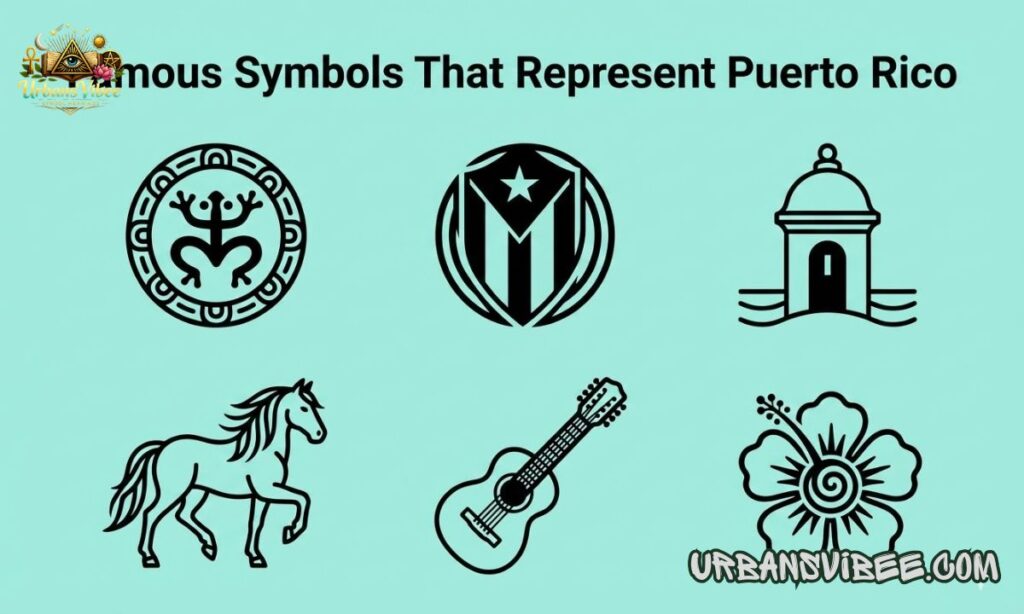
The most iconic symbols that represent Puerto Rico at a glance:
- The Coquí Frog
- The Puerto Rican Flag
- The Sol de Jayuya (Taíno Sun)
- Flor de Maga (National Flower)
- El Yunque National Rainforest
- The Coat of Arms
- Atabey (Mother Goddess)
- The Stripe-Headed Tanager (National Bird)
- The Leatherback Sea Turtle
- The Conch Shell (Cobo)
Taino Sun Symbol Meaning
The Sol de Jayuya — also known as the Taíno Sun or El Sol Taíno — is arguably the most recognized Taíno symbol used in modern Puerto Rican culture. It takes the form of a circular face with geometric rays extending outward, discovered as a petroglyph in Jayuya, Puerto Rico.
What it represents:
- The sun as a life-giving divine presence
- Yucahu, the Taíno supreme deity of agriculture and the sea
- Strength, protection, and spiritual energy
- Indigenous identity and Puerto Rican pride
For many Boricuas, wearing or displaying the Taíno Sun means reconnection to ancestral roots, resistance to cultural erasure, and a declaration that Taíno culture survived.
Puerto Rico Symbol Frog
The coquí frog (Eleutherodactylus) is Puerto Rico’s most beloved natural symbol. Tiny — barely the size of a quarter — but extraordinarily loud, especially after sunset. Only the male coquí sings its distinctive “co-KEE” call, which inspired its onomatopoeic name.
What makes the coquí especially unique:
- It is endemic to Puerto Rico, found nowhere else in its natural form
- Unlike most frogs, it skips the tadpole stage entirely, hatching as miniature adults
- There are currently 17 recognized species, several of them endangered
- The Taíno revered the coquí as a spirit-world symbol, incorporating it into their mythology
The coquí’s Taíno legend tells of a goddess who created the frog to forever call the name of her lost love, Coquí, taken by the hurricane god Juracán. That cry — “Co-kee! Co-kee!” — echoes across Puerto Rico every night.
Puerto Rican Symbols Toa
The Toa symbol is one of the most emotionally resonant Taíno symbols in Puerto Rican heritage. “Toa” means mother in the Taíno language. According to legend, when the god Guahoyona abducted all the women of the island, the children left behind cried out “Toa, Toa” in hunger and grief.
The men, unable to console their children, were transformed into frogs — a legend that directly connects the coquí to motherhood and loss. The Toa region of Puerto Rico bears this name as a living tribute.
Deep Symbolic Meaning
Puerto Rican symbols are not decorative — they are spiritual. They encode beliefs about:
- Life and death — The Taíno sun rising from the same cave as the moon represents the eternal cycle
- Fertility and creation — Atabey governs rivers, childbirth, and renewal
- Resistance — The Puerto Rican flag was once banned under U.S. colonial rule; every time someone displays it, they reclaim that history
- Belonging — The coquí saying “Soy de aquí como el coquí” is a declaration of rootedness
Types and Variations of Puerto Rican Symbols
The Coquí Frog
The universal symbol of Puerto Rican identity. Appears in children’s books, fine art, tourism logos, baby shower decorations, and tattooed on skin across the world. Its simple, recognizable shape makes it one of the most versatile symbols in Puerto Rican iconography.
The Sun Symbol (Taíno Sun)
The Guey sun circle with its geometric face and radiating rays is the most tattooed Puerto Rican symbol in the U.S. diaspora community. Its origin — over 1,000 years before Spanish arrival — gives it deep ancestral authority.
The Puerto Rican Flag
Five alternating red and white stripes, a blue equilateral triangle, and a single white five-pointed star. Each element carries meaning: the red stripes represent the blood of brave warriors; the white stripe symbolizes liberty and victory; the blue triangle stands for the sky and coastal waters; the lone white star represents the island itself. Its emotional power comes from its history of being banned, reclaimed, and celebrated — a living symbol that grows more meaningful with each generation.
The Coquí Taíno Symbol
The Taíno artistic representation of the coquí frog — found carved into stones, petroglyphs, and ceremonial objects. The Coquí Taíno drawing remains one of the most popular designs in Puerto Rican tattoo art, honoring the intersection of indigenous heritage and national identity.
The Hibiscus Flower
The Flor de Maga (Thespesia grandiflora) is Puerto Rico’s national flower — endemic to the island and found nowhere else in the world. Its deep pink-red petals represent the island’s natural beauty, femininity, and tropical soul. It appears in gardens, artwork, and festival celebrations across Puerto Rico.
The Taíno Spiral
A common motif across Taíno rock art, the spiral represents cosmic energy and its endlessness. It also symbolizes sweet water — the life-giving freshwater rivers of the island. The spiral carries both material and spiritual meaning, appearing in tattoos as a symbol of personal transformation and continuity.
Puerto Rican Symbols Across Cultures
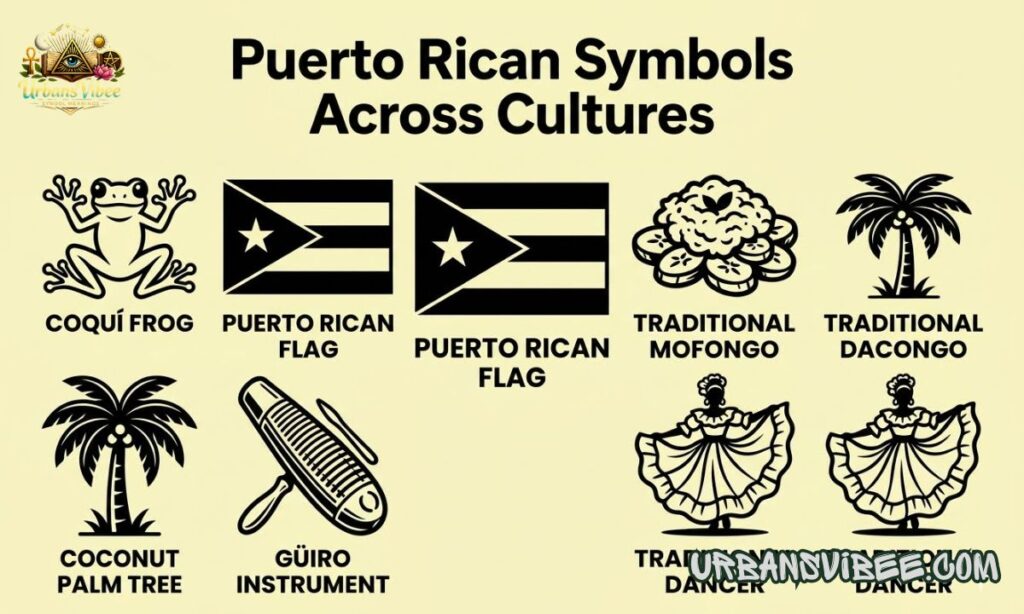
Puerto Rican symbols don’t belong to one era or one people — they are layered across cultures:
- Taíno symbols form the deepest root, connecting Puerto Ricans to the island’s first inhabitants
- Spanish colonial symbols — the coat of arms, Catholic crosses, and heraldic imagery — reflect 400 years of colonial history
- African-influenced symbols appear in spiritual traditions like Santería, brought by enslaved West Africans
- Modern diaspora symbols — the flag, the coquí emoji, and digital culture — carry the identity of Puerto Ricans worldwide
This multilayered heritage is precisely what makes Puerto Rican symbolism so rich and ongoing.
Puerto Rican Symbols in Art, Movies and Pop Culture
Puerto Rican symbols have crossed into mainstream culture in powerful ways:
- The coquí appears in children’s media, tourism branding, and fine art across the island
- The Taíno Sun and coquí are central to the visual identity of Puerto Rican restaurants and businesses in the U.S.
- Puerto Rican flag imagery has appeared in major protests, fashion runways, and Super Bowl halftime shows
- Taíno-inspired geometric patterns appear in jewelry collections, clothing brands, and contemporary art galleries
- In music, artists frequently reference coquí calls, island imagery, and Taíno heritage to anchor their cultural identity
Spiritual and Dream Meaning of Puerto Rican Symbols
In spiritual traditions, Puerto Rican symbols carry protective and prophetic power:
- Dreaming of the coquí is considered a sign of home, longing, or a message from ancestors
- The Taíno Sun in spiritual practice represents clarity, awakening, and divine guidance
- Atabey, the frog goddess, is invoked in water-based rituals for fertility and protection during transitions
- Zemi figures were kept in homes and carried into ceremonies as conduits to ancestral spirits
- The spiral in meditation represents the journey inward — the soul’s return to its source
Positive vs Negative Meaning
Most Puerto Rican symbols are overwhelmingly positive — but context matters:
| Symbol | Positive Meaning | Cautionary Note |
| Coquí | Pride, home, resilience | Outside Puerto Rico, can feel misrepresented |
| Taíno Sun | Life, divine strength | Sacred — avoid casual, disrespectful use |
| Puerto Rican Flag | Freedom, identity | Once banned; carries political history |
| Zemi Figures | Ancestral protection | Spiritual power — not merely decorative |
| Atabey | Fertility, motherhood | Sacred feminine — approach with respect |
Why Humans Are Attracted to Puerto Rican Symbols
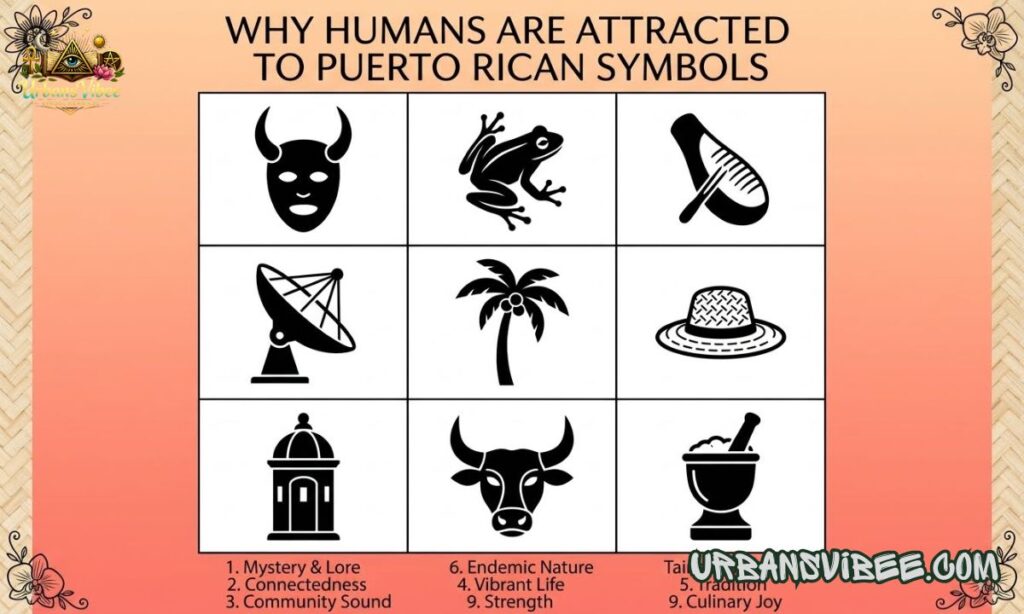
There is something deeply compelling about Puerto Rican symbols that transcends cultural origin. They speak to universal human needs:
- Belonging — They say “I know where I come from”
- Resilience — A culture that survived colonization and natural disaster uses these symbols to declare we are still here
- Beauty — The coquí, the hibiscus, the spiral — these are visually compelling and emotionally resonant
- Spirituality — In a world searching for meaning, ancient symbols offer roots and grounding
- Identity in displacement — For the Puerto Rican diaspora, these symbols are passports to home
Conclusion
Puerto Rican symbols are living documents — they carry history, spirituality, love, and resistance all at once. From the coquí’s nightly call in El Yunque to the Taíno Sun tattooed on the arm of a Boricua in Brooklyn, these symbols travel wherever Puerto Rican people go.
They are not fossils of a lost past but active declarations of who Puerto Ricans are today. Learning to read them means learning to listen to the island’s true soul — and that is a story worth knowing.
Frequently Asked Questions
What is the most famous Puerto Rican symbol?
The coquí frog is widely considered the most iconic Puerto Rican symbol, representing island pride, resilience, and the unique spirit of Boricua identity.
What do Taíno symbols mean?
Taíno symbols represent gods, natural forces, ancestral spirits, and stories of daily life — carved into rocks and caves across Puerto Rico before Spanish colonization.
What is the Puerto Rico symbol frog called?
The famous Puerto Rican frog is called the coquí (Eleutherodactylus), named for its distinctive “co-KEE” nighttime call.
What does the Taíno Sun symbolize?
The Sol de Jayuya (Taíno Sun) symbolizes life, divine energy, protection, and the supreme deity Yucahu — and today represents indigenous Puerto Rican pride.
Are Puerto Rican symbols used in tattoos?
Yes, Puerto Rican symbol tattoos — especially the coquí, Taíno Sun, flag, and spiral — are among the most popular cultural tattoo designs in both Puerto Rico and the U.S. diaspora.
What is the Toa symbol in Puerto Rican culture?
The Toa symbol comes from the Taíno word for mother and is tied to a legend of children crying for their abducted mothers — connecting it to themes of longing, motherhood, and transformation.
What does the Puerto Rican flag symbolize?
Each element of the flag carries meaning: red stripes for the blood of warriors, white stripes for liberty, the blue triangle for sky and sea, and the white star for the island of Puerto Rico.
What are Puerto Rican protection symbols?
Protection symbols in Puerto Rican tradition include Zemi figures, the Atabey goddess, the Taíno Sun, and various African-influenced spiritual symbols embedded in Santería and folk traditions.

Stephen Miller is a language enthusiast and symbol researcher at UrbansVibee. He specializes in uncovering the meanings, origins, and cultural significance of symbols, helping readers understand signs, icons, and symbolism from around the world.