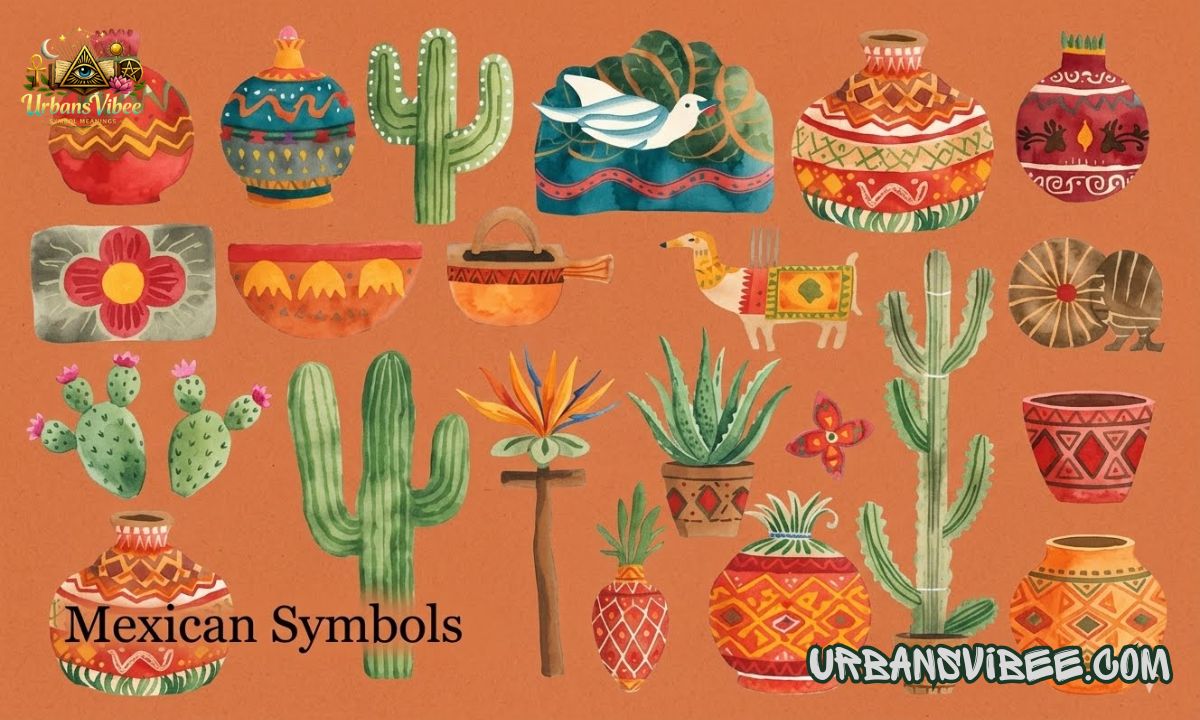
Mexico is one of the most symbolically rich nations on earth. Its symbols carry thousands of years of history. They connect ancient gods to modern celebrations. They blend indigenous wisdom with Catholic faith.
And they tell the story of a people who never lost their identity, even through conquest and hardship. This complete guide covers 89+ Mexican symbols and their deep meanings — from the eagle on the flag to the marigold on a Día de los Muertos altar.
What are Mexican Symbols?
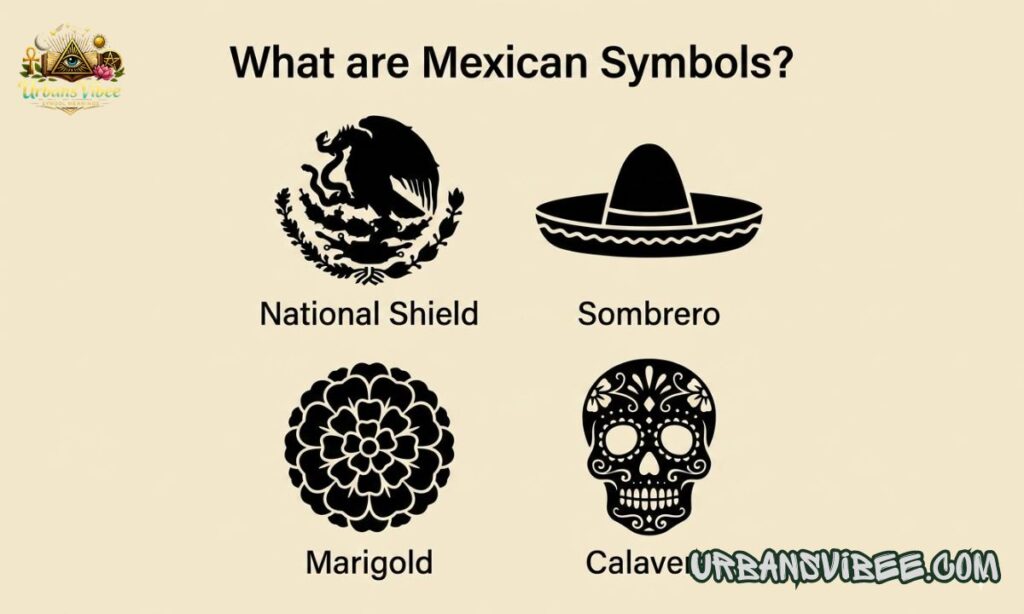
Mexican symbols are visual and spiritual signs that come from ancient Mesoamerican civilizations like the Aztecs and the Maya. Spanish colonial influence later added Catholic imagery to the mix. Together, these layers created one of the most layered symbol systems in the world.
These symbols appear everywhere in Mexico. You see them on the national flag, in architecture, in art, in festivals, and in everyday life. Each one carries deep cultural meaning that goes far beyond its appearance.
Traditional Mexican Symbols And Their Deep Meanings
Mexican Flag
The Mexican flag has three vertical stripes: green, white, and red. Green represents hope. White stands for unity and peace. Red honors the blood of national heroes. At the center sits the coat of arms — an eagle devouring a serpent while perched on a cactus. This image comes directly from Aztec legend and represents the founding of Mexico City.
| Color | Original Meaning | Modern Meaning |
| Green | Independence | Hope |
| White | Religion | Unity and Peace |
| Red | Union | Blood of National Heroes |
Mexican Symbols And Meanings
Every major Mexican symbol carries more than one layer of meaning. Many symbols carry historical, spiritual, and emotional meaning all at once. That layered depth is what makes Mexican symbolism so powerful and enduring.
Mexican Symbols Tattoos
Mexican symbol tattoos are extremely popular worldwide. The most common choices include:
- Sugar skulls for remembrance and love
- The Aztec sun stone for ancient wisdom
- Eagles for strength and national pride
- Marigolds for connection to ancestors
- The Virgin of Guadalupe for protection and faith
- Quetzalcoatl for rebirth and cosmic power
Each tattoo carries personal emotional weight alongside its historical significance.
Mexican Symbols Copy And Paste
People frequently search for Mexican symbols in text or emoji form to use in social media captions, cultural projects, and design work. Common visual references include the eagle, the sun stone, marigolds, and skull imagery. These symbols have moved beyond Mexico into global visual culture.
Ancient Mexican Symbols
Ancient Mexican symbols came primarily from Aztec and Maya civilizations. They included representations of gods, cosmic cycles, nature, and human sacrifice. Many of these symbols appear carved into pyramids, temples, and pottery that still exist today.
Indigenous Mexican Symbols
Indigenous Mexican symbols predate Spanish arrival by thousands of years. They reflect a worldview where nature, time, death, and rebirth were all deeply connected. Corn, the jaguar, the feathered serpent, and the sun all carried sacred meaning to indigenous communities long before the colonial era.
Traditional Mexican Symbols
| Symbol | Origin | Meaning |
| Eagle and Snake | Aztec | Founding of Mexico, divine destiny |
| Quetzalcoatl | Aztec/Maya | Wisdom, creation, rebirth |
| Aztec Sun Stone | Aztec | Cosmic cycles, time, the universe |
| Marigold (Cempasúchil) | Aztec | Remembrance, guiding spirits |
| Sugar Skull | Aztec/Catholic | Love, death, Día de los Muertos |
| Jaguar | Maya/Aztec | Power, night, spiritual transformation |
| Corn (Maize) | Mesoamerican | Life, creation, sustenance |
| Monarch Butterfly | Mexican folklore | Souls of the dead |
| Cross | Catholic/Maya | Faith, cardinal directions |
| Flaming Heart | Catholic | Divine love, sacrifice |
| Ceiba Tree | Maya | Connection between heaven and earth |
| Sombrero | Colonial | Protection, Mexican cultural identity |
| Papel Picado | Folk art | Celebration, memory |
| La Catrina | Modern folk | Death, elegance, satire |
| Alebrijes | Modern folk art | Imagination, spiritual animals |
Mexican Symbols Of Love, Protection And Strength
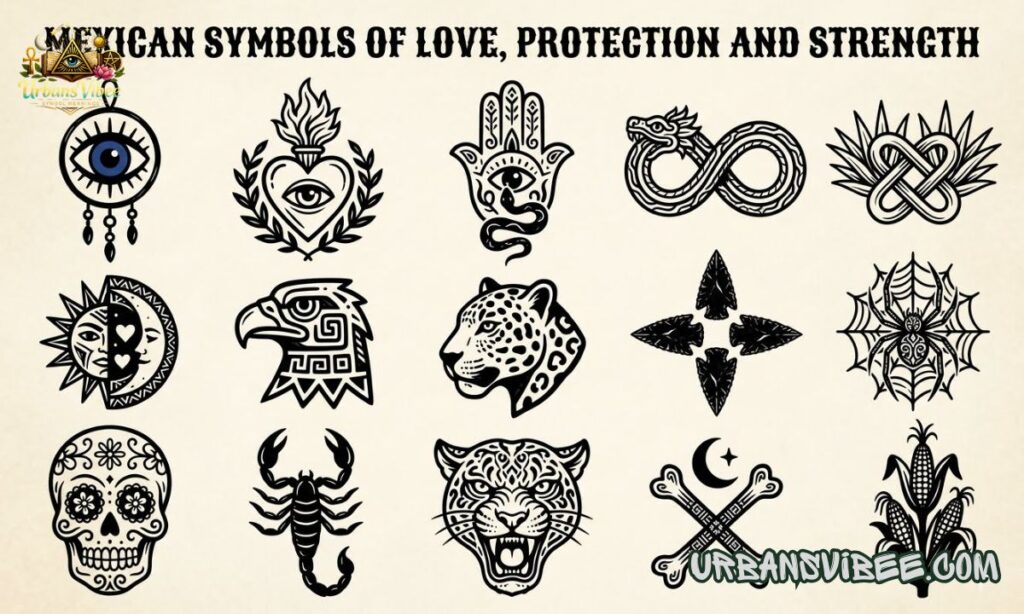
Mexican Symbols Of Protection
- The Virgin of Guadalupe is the most powerful protection symbol in Mexican culture. Millions wear her image as a shield against harm.
- The flaming heart or Sacred Heart represents divine protection through faith.
- Amulets and milagros (small metal charms) are used to protect against illness and misfortune.
- Obsidian was used by Aztec priests as a spiritual mirror to ward off dark forces.
Mexican Symbols Of Strength
- The eagle represents warrior strength and solar power in Aztec tradition.
- The jaguar is the ultimate symbol of raw physical and spiritual strength.
- Quetzalcoatl symbolizes inner strength through wisdom and creation.
- The obsidian blade represented the sharp force of divine will.
Mexican Symbols Of Love
- The marigold flower expresses love for the dead and enduring family bonds.
- The flaming heart represents passionate, divine love.
- Xóchitl (the flower goddess) was the Aztec symbol of love, beauty, and creativity.
- Papel picado used during weddings represents the delicate but beautiful nature of love.
Important Mexican Symbols
Some Mexican symbols carry weight beyond art or decoration. They shape national identity, spiritual life, and community values. The most important include the eagle and serpent, the Virgin of Guadalupe, the Aztec sun stone, the marigold, and the sugar skull. Each one appears across multiple areas of Mexican life — from government emblems to family altars.
Read This: 89+ Popular Sanskrit Symbols That Can Transform Your Life in 2026
Mexican Symbols Drawings
Mexican symbols appear in murals, pottery, textiles, tattoos, and street art. Artists like Diego Rivera used national symbols to tell stories of revolution, indigenous identity, and social justice. The hand-painted style of Mexican folk art makes even simple symbols feel alive and emotionally direct.
New Mexican Symbols
Modern Mexican symbols include La Catrina — the elegant skeleton figure created by artist José Guadalupe Posada. Alebrijes, colorful fantasy creatures, are another modern addition. Both are now internationally recognized symbols of Mexican creativity and cultural spirit.
Aztec Mexican Symbols
Aztec symbols revolved around war, cosmic order, and divine authority. The sun was central to everything. The Aztec calendar stone, also called the Sun Stone, mapped out cosmic time in extraordinary detail. Symbols of gods like Huitzilopochtli (war), Tlaloc (rain), and Quetzalcoatl (wisdom) appeared on temples, weapons, and clothing.
Ancient Mexican Symbols And Meanings
| Symbol | Civilization | Meaning |
| Huitzilopochtli | Aztec | Sun god, war, sacrifice |
| Tlaloc | Aztec | Rain, fertility, harvest |
| Quetzalcoatl | Aztec/Maya | Creation, wind, wisdom |
| Jaguar | Maya/Aztec | Night, power, underworld |
| Ceiba Tree | Maya | Axis of the universe |
| Obsidian Mirror | Aztec | Spiritual vision, the night sky |
| Maize God | Maya | Creation of humanity |
| Kukulkan | Maya | Sky, water, rebirth |
What Are Some Mexican Symbols?
Some of the most recognized Mexican symbols include:
- Eagle devouring a serpent on a cactus (Mexican coat of arms)
- Sugar skulls (Día de los Muertos)
- Marigold flowers (Cempasúchil)
- Aztec Sun Stone
- Virgin of Guadalupe
- Quetzalcoatl (Feathered Serpent)
- Monarch butterfly
- La Catrina
- Sombrero
- Papel picado
Things That Represent Mexico
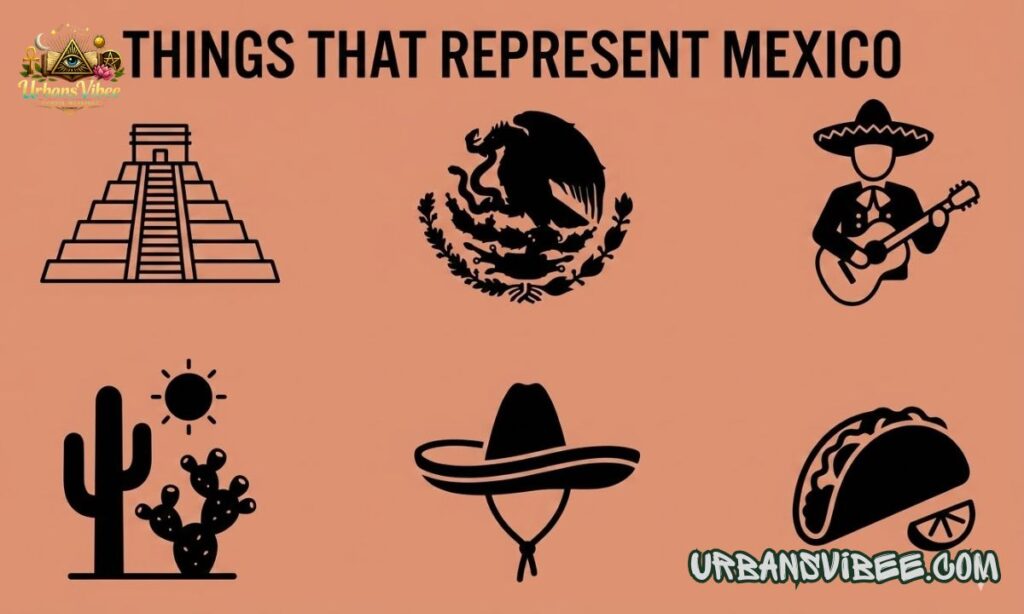
Mexico is represented by a range of symbols beyond the national flag:
- National Bird: Golden Eagle
- National Flower: Dahlia
- National Tree: Montezuma Cypress
- National Sport: Charrería
- National Dish: Mole Sauce
- National Dance: Jarabe Tapatío (Mexican Hat Dance)
- National Color: Green, White, and Red
Mexican Symbols Culture
Mexican culture weaves symbols into every part of daily life. Symbols appear in food, music, festivals, architecture, and clothing. The Day of the Dead alone involves dozens of overlapping symbols — skulls, marigolds, altars, papel picado, candles, and photographs — all working together to express love, memory, and spiritual connection.
Popular Symbols That Represent Mexico
The five most globally recognized symbols of Mexico are:
- The Eagle and Serpent (national identity)
- Sugar Skulls (Día de los Muertos)
- Virgin of Guadalupe (faith and protection)
- Aztec Sun Stone (ancient civilization)
- Marigold Flowers (ancestors and memory)
Iconic Mexican Symbols
The most iconic Mexican symbols carry meaning that resonates far beyond Mexico’s borders. The sugar skull, for example, has become a globally recognized symbol of both Mexican culture and universal themes of death and remembrance. The eagle appears on the Mexican flag seen in every country on earth.
Symbols Of Mexican Culture
Mexican cultural symbols bridge different worlds — ancient and modern, indigenous and Catholic, local and global. They remind the world that Mexico is not a single story but thousands of stories layered on top of one another.
Mexico Symbols And Meanings
| Symbol | Meaning |
| Eagle and Snake | Triumph, destiny, founding of Mexico |
| Marigold | Remembrance, love for ancestors |
| Sugar Skull | Death as celebration, family bonds |
| Monarch Butterfly | Souls of the dead, migration, freedom |
| Jaguar | Strength, night, the underworld |
| Corn (Maize) | Creation, sustenance, life |
| Flaming Heart | Divine love, sacrifice, faith |
| La Catrina | Death with dignity, satirical elegance |
| Sombrero | Mexican cultural identity, protection |
| Papel Picado | Festivity, fragility of life |
Mexican Symbolism
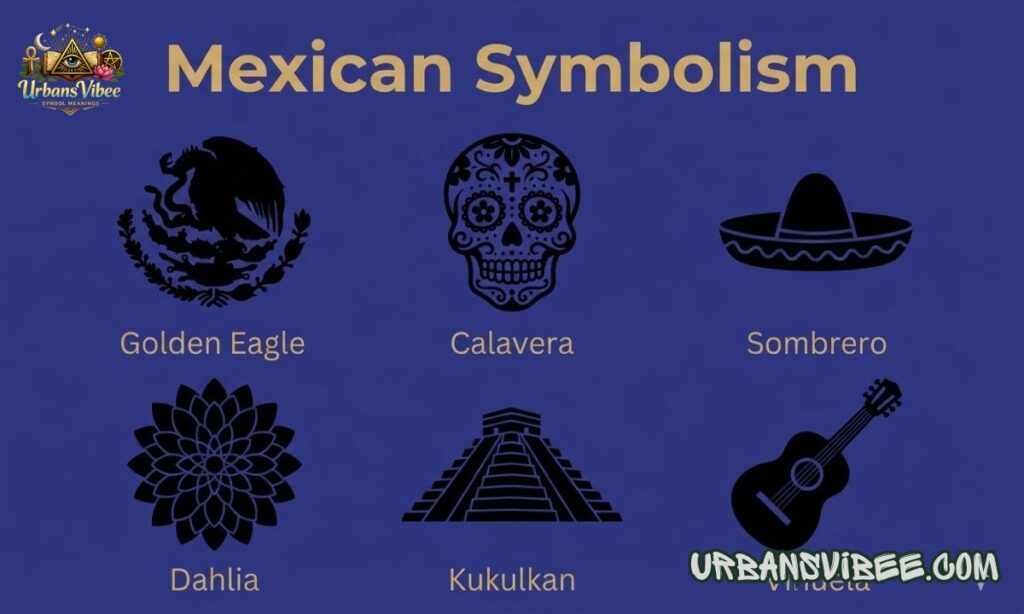
Mexican symbolism is unique because it fuses two completely different worldviews. Indigenous Mesoamerican beliefs saw the world as cyclical — full of death and rebirth, destruction and renewal. Catholic Spanish tradition added themes of sacrifice, divine love, and redemption. When those two systems met, the result was Mexican symbolism as the world knows it today.
Mexican Cultural Symbols
Mexican cultural symbols serve as acts of memory and resistance. They kept indigenous identity alive through centuries of colonization. Today they continue to shape Mexican art, politics, fashion, and global pop culture.
Symbols In Mexican Culture
Symbols in Mexican culture are not decorative objects. They are living expressions of belief. A marigold on a Día de los Muertos altar is not just a flower. It is a spiritual invitation for a loved one’s soul to return home. That level of meaning is present in nearly every Mexican symbol.
Mexican Heritage Symbols
Mexican heritage symbols reflect pride in both pre-colonial and colonial history. They honor indigenous roots while acknowledging the complex fusion that created modern Mexican identity. This combination is what makes Mexican heritage symbolism so emotionally powerful to people inside and outside Mexico.
Also Read This: 89+ Best Hand Symbols and Their Hidden Meanings Explained in 2026
Mexican Protection Symbols
The strongest Mexican protection symbols include:
- Virgin of Guadalupe — spiritual guardian of Mexico
- Sacred Heart — divine protection through faith
- Obsidian — Aztec protective mirror against evil
- Milagros — small metal charms for specific blessings
- Eye of God (Ojo de Dios) — Huichol symbol warding off harm
Deep Symbolic Meaning of Mexican Symbols
Spiritual Meaning
Spiritually, Mexican symbols represent the balance between life and death. The Aztec worldview saw the universe as cyclical. Destruction and rebirth were both part of divine order. Death was not the end — it was a transition. That belief flows through almost every major Mexican symbol, from the sugar skull to the marigold to the eagle soaring toward the sun.
Psychological Meaning
Psychologically, Mexican symbols help people process fear, grief, and identity. The colorful celebration of Día de los Muertos is a perfect example. It transforms fear of death into a beautiful act of love and remembrance. These symbols give people a framework for handling emotions that might otherwise feel overwhelming.
Cultural Meaning
Culturally, Mexican symbols are acts of survival. After colonization, indigenous communities used art, ceremony, and symbolism to preserve their identity. These symbols became a quiet but powerful form of resistance. They said: we are still here, and we still remember who we are.
Types / Variations of Mexican Symbols
1. Eagle and Snake on Cactus
This is Mexico’s most official symbol. According to Aztec legend, the god Huitzilopochtli told his people to build their capital where they saw an eagle eating a serpent on a cactus. When they found that sign on an island in Lake Texcoco, they built Tenochtitlan — modern-day Mexico City.
The image appears on the Mexican coat of arms and national flag. It represents destiny, divine guidance, and the triumph of good over chaos.
2. Quetzalcoatl (Feathered Serpent)
Quetzalcoatl is one of the most important deities in Mesoamerican mythology. He is the feathered serpent — part bird, part snake — representing the union of sky and earth. He was the god of wind, wisdom, and creation.
His temple at Chichen Itza is designed so that during the equinox, the shadow of a serpent appears to descend the staircase. Quetzalcoatl also symbolizes rebirth because snakes shed their skin and return renewed.
3. Aztec Sun Stone
The Aztec Sun Stone, often called the Aztec Calendar, is one of the most complex symbols in Mexican history. It was carved in the 15th century and measures nearly 12 feet across. The stone maps out cosmic time across multiple eras called “suns.”
At its center is the face of the sun god Tonatiuh, surrounded by symbols of the four previous ages of the world. It represents the Aztec belief that the universe operates in great cycles of creation and destruction.
4. Marigold Flower (Cempasúchil)
The marigold is the official flower of Día de los Muertos. Its bright orange color and strong scent are believed to guide the souls of the dead back to their families during the celebration. The name Cempasúchil comes from the Nahuatl language. The flower is used to decorate altars, pathways, and graves. It represents love, remembrance, and the connection between the living and the dead.
5. Sugar Skulls
Sugar skulls are among the most globally recognized Mexican symbols. They are colorful, decorated skull-shaped sweets placed on Día de los Muertos altars to honor the deceased. They are not meant to be frightening.
They represent the sweetness of life, love for those who have passed, and the Mexican belief that death is simply another part of existence. In recent decades, sugar skull imagery has spread worldwide through fashion, tattoos, and art.
Mexican Symbols Across Cultures
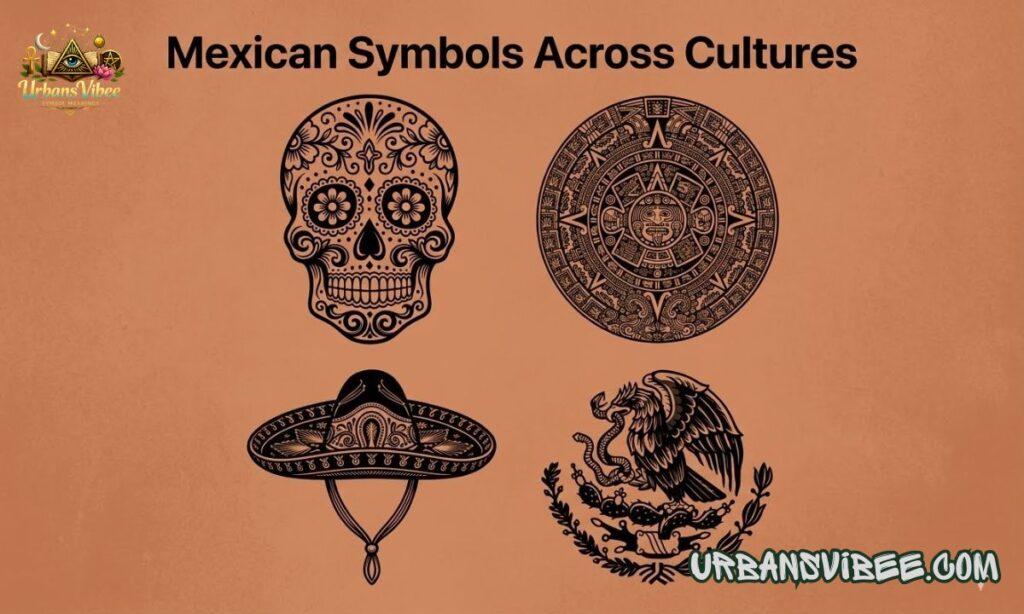
1. Aztec Civilization
In Aztec culture, symbols represented gods, war, cosmic cycles, and the calendar. Everything had divine meaning. Architecture, clothing, weapons, and food offerings all carried symbolic weight. Symbols were not separate from daily life — they were woven directly into it.
2. Mayan Culture
Maya symbols were deeply connected to astronomy, mathematics, and time. The Maya developed one of the most sophisticated calendar systems in the ancient world. Their symbols tracked the movement of stars and planets with remarkable accuracy. The jaguar, ceiba tree, and feathered serpent were all central to Maya symbolism.
3. Spanish Colonial Era
When Spanish colonizers arrived in the 16th century, they brought Catholic symbolism with them. The cross, the Virgin Mary, the Sacred Heart, and images of saints merged with existing indigenous symbols.
This fusion created a uniquely Mexican form of religious and cultural expression that still defines much of the country today.
4. Modern Western Culture
Mexican symbols have entered global mainstream culture through film, fashion, music, and social media. Día de los Muertos imagery appears in Halloween decorations, clothing brands, tattoo studios, and Hollywood films. The sugar skull alone has become a recognizable symbol far beyond its original cultural context.
5. Indigenous Modern Communities
In modern indigenous Mexican communities, traditional symbols continue to carry deep spiritual and social meaning. Huichol art uses intricate yarn paintings to represent spiritual visions and cosmic stories. Zapotec, Mixtec, and Nahua communities maintain ceremonial traditions that rely on ancient symbolic systems.
Mexican Symbols in Art, Movies & Pop Culture
Mexican symbols have a massive presence in global art and media:
- Movies: Pixar’s Coco introduced millions worldwide to marigolds, sugar skulls, and Día de los Muertos altars through an emotionally powerful story about family and memory.
- Murals: Diego Rivera used eagles, corn, indigenous faces, and revolutionary symbols to tell Mexico’s history on a massive public scale.
- Tattoos: Mexican symbol tattoos are among the most requested designs globally, combining bold imagery with deep personal meaning.
- Fashion: Brands worldwide use sugar skull and marigold motifs in clothing, accessories, and home décor.
- Street Art: Mexican muralism and its symbolic imagery continue to inspire street artists across Latin America, the United States, and Europe.
Spiritual & Dream Meaning of Mexican Symbols
Dreaming about Mexican symbols often carries powerful emotional messages. Seeing a marigold in a dream may signal remembrance or a message from a loved one who has passed. Dreaming of an eagle often represents personal strength and destiny. Sugar skulls in dreams typically point to acceptance, transformation, or unresolved grief.
Spiritually, many people use Mexican symbols in meditation, altar-building, and healing practices. The symbols carry strong themes of rebirth, protection, and connection to ancestors — making them meaningful to people well beyond Mexican culture.
Positive vs Negative Meaning
Positive Meanings
- Marigolds represent love, memory, and spiritual connection
- Eagles represent strength, destiny, and divine guidance
- Sugar skulls represent joy in remembrance and acceptance of mortality
- The Virgin of Guadalupe represents protection, hope, and maternal love
- Corn represents life, creation, and abundance
- Monarch butterflies represent the souls of ancestors returning with love
Negative Meanings
- Some Aztec symbols involve themes of human sacrifice and violent cosmic order
- Skull imagery can be misunderstood or culturally misappropriated without context
- The jaguar in some traditions represented the dangerous, destructive power of the night
- Colonial era symbols reflect the trauma of conquest and forced religious conversion
- The obsidian blade carries associations with death and ritual violence
Why Humans Are Attracted to Mexican Symbols
Mexican symbols touch universal emotions. Everyone understands love, loss, death, and the desire to be remembered. That is exactly what most Mexican symbols are about. They speak to something deep inside every human being, regardless of cultural background.
Their visual boldness also draws people in. Bright colors, strong shapes, and rich imagery make Mexican symbols immediately striking. They are beautiful first and meaningful second — which makes them easy to notice and difficult to forget.
There is also something appealing about cultures that honor death instead of fearing it. The Mexican tradition of celebrating the dead with flowers, food, music, and joy offers a different relationship with mortality that many people find deeply comforting.
Conclusion
Mexican symbols are not relics from the past. They are living expressions of identity, faith, survival, and love. From the eagle on the national flag to the marigold glowing on a Día de los Muertos altar, each symbol carries centuries of meaning inside it.
They connect ancient Aztec and Maya wisdom to modern Mexican life and global culture. Understanding these symbols means understanding one of the richest and most emotionally honest cultures in human history — a culture that turns death into celebration, history into art, and survival into beauty.
Frequently Asked Questions
What are Mexican symbols?
Mexican symbols are visual and spiritual representations from ancient Mesoamerican civilizations like the Aztecs and Maya, blended with Spanish Catholic influence, used in art, festivals, and national identity.
What is the most important Mexican symbol?
The eagle devouring a serpent on a cactus is the most official symbol of Mexico. It appears on the national flag and coat of arms and represents the founding of Mexico City.
What do sugar skulls symbolize in Mexican culture?
Sugar skulls symbolize love and remembrance for the deceased. They are used during Día de los Muertos to honor ancestors and celebrate the belief that death is a natural part of life.
What does the marigold represent in Mexico?
The marigold (Cempasúchil) represents remembrance and spiritual connection. Its bright color and scent are believed to guide the souls of the dead home during Día de los Muertos celebrations.
What is the meaning of Quetzalcoatl?
Quetzalcoatl is the feathered serpent deity of the Aztec and Maya. He represents creation, wisdom, wind, and rebirth. His image appears in temples and artwork across Mesoamerica.
What Mexican symbols are used for protection?
The Virgin of Guadalupe, the Sacred Heart, milagros (small metal charms), obsidian, and the Ojo de Dios (Eye of God) are the most common Mexican protection symbols.
What does the jaguar mean in Mexican culture?
The jaguar represents strength, power, and the spiritual energy of the night. It was the spirit animal of the Aztec god Tezcatlipoca and was revered by both Aztec and Maya civilizations.
Are Mexican symbols used in tattoos?
Yes. Mexican symbol tattoos are extremely popular worldwide. The most common designs include sugar skulls, the Aztec sun stone, eagles, marigolds, the Virgin of Guadalupe, and Quetzalcoatl.
What is the Aztec Sun Stone?
The Aztec Sun Stone is a large carved disc representing Aztec cosmic time and the cycle of ages. It is one of the most important surviving artifacts of ancient Mexican civilization.
What does the monarch butterfly represent in Mexico?
The monarch butterfly is believed to carry the souls of deceased loved ones. Millions of monarchs migrate to Mexico each year around Día de los Muertos, making them a powerful symbol of ancestral return.

Stephen Miller is a language enthusiast and symbol researcher at UrbansVibee. He specializes in uncovering the meanings, origins, and cultural significance of symbols, helping readers understand signs, icons, and symbolism from around the world.